Miaphysites (non-Chalcedonian / Oriental Orthodox)
"Monophysites" (outsider label), Anti-Chalcedonians, Jacobites (Syriac, after Jacob Baradaeus; outsider label), Severans, Oriental Orthodox (modern communion)
451 (rejection of Chalcedon) – present
attested. Well attested on both sides. Whether the dispute was mainly about substance or terminology is debated, and modern ecumenical statements adopt the terminological view.
Leaders
- Cyril of Alexandria (authority; d. 444)
- Dioscorus I of Alexandria
- Timothy Aelurus
- Peter Mongus
- Philoxenus of Mabbug
- Severus of Antioch (d. 538)
- Jacob Baradaeus (d. 578)
- Empress Theodora (patron)
- Theodosius I of Alexandria
Beliefs
Following Cyril's formula 'one incarnate nature (mia physis) of God the Word', they confess Christ as one nature from two, fully divine and fully human, united without mixture, confusion or division. They rejected Chalcedon's 'in two natures' and Pope Leo's Tome as reviving Nestorius. They also condemned Eutyches, so the older label 'Monophysite', implying the humanity was absorbed, is rejected as unfair.
Home bases
Loading the map…
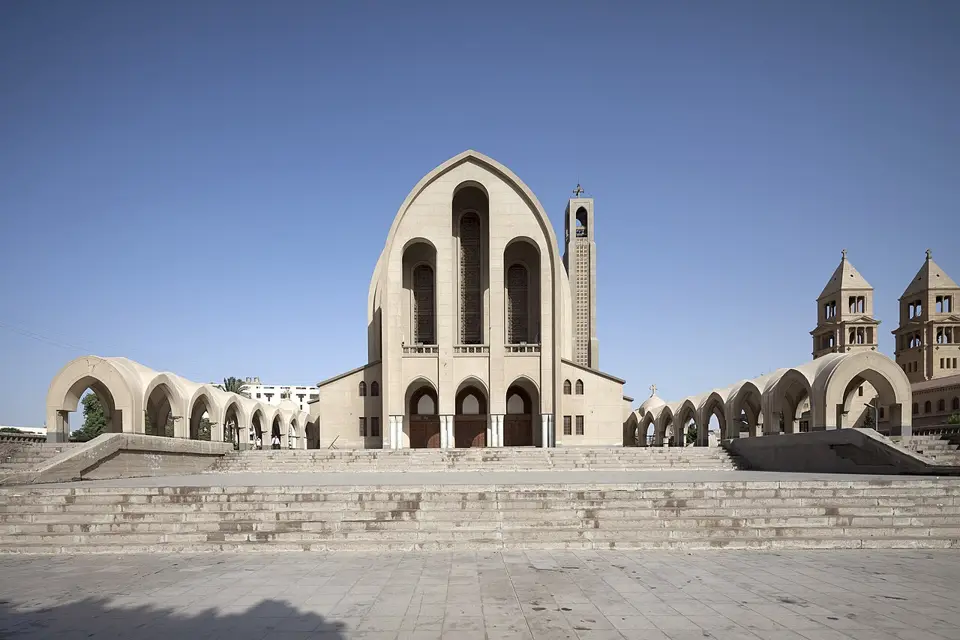
Alexandria (Coptic Orthodox patriarchate)
Alexandria, Egypt · 5th–present
After Dioscorus was deposed at Chalcedon in 451, most Egyptian Christians and their bishops rejected the council. Rival patriarchs followed: anti-Chalcedonian Timothy Aelurus and Chalcedonian Proterius, who was lynched in 457. The anti-Chalcedonian line became the Coptic Orthodox Church, whose patriarchate later moved to Cairo.
Own work. CC BY-SA 3.0 · Wikimedia CommonsThis photograph shows the modern city, or the Wikipedia lead subject, rather than the ancient site itself. Mabbug (Hierapolis Bambyce): see of Philoxenus
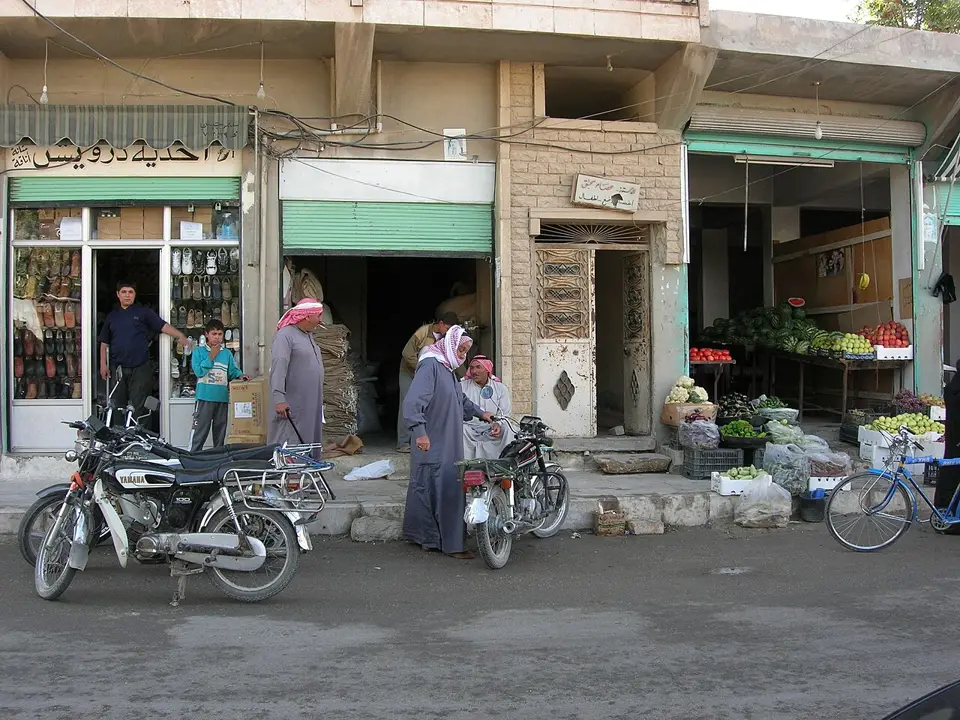
Manbij, Syria · 5th–6th
Philoxenus (Aksenaya), bishop here from 485 to 519, was a leading Syriac anti-Chalcedonian theologian. He sponsored the Philoxenian revision of the Syriac New Testament in 507/508. He died in exile at Gangra around 523.
https://web.archive.org/web/20160405062126/http://www.panoramio.com/photo/7563804. CC BY 3.0 · Wikimedia CommonsThis photograph shows the modern city, or the Wikipedia lead subject, rather than the ancient site itself. Qenneshre monastery (Euphrates)
Near Jarablus area (site not certainly identified), Syria/Turkey · 6th–9th
Approximate location.
Qenneshre ('Eagles' Nest') was the leading Syriac Orthodox school monastery. Its monks translated Greek philosophy, science and patristic works into Syriac, and its scholars included Severus Sebokht and Jacob of Edessa. Several patriarchs came from it.
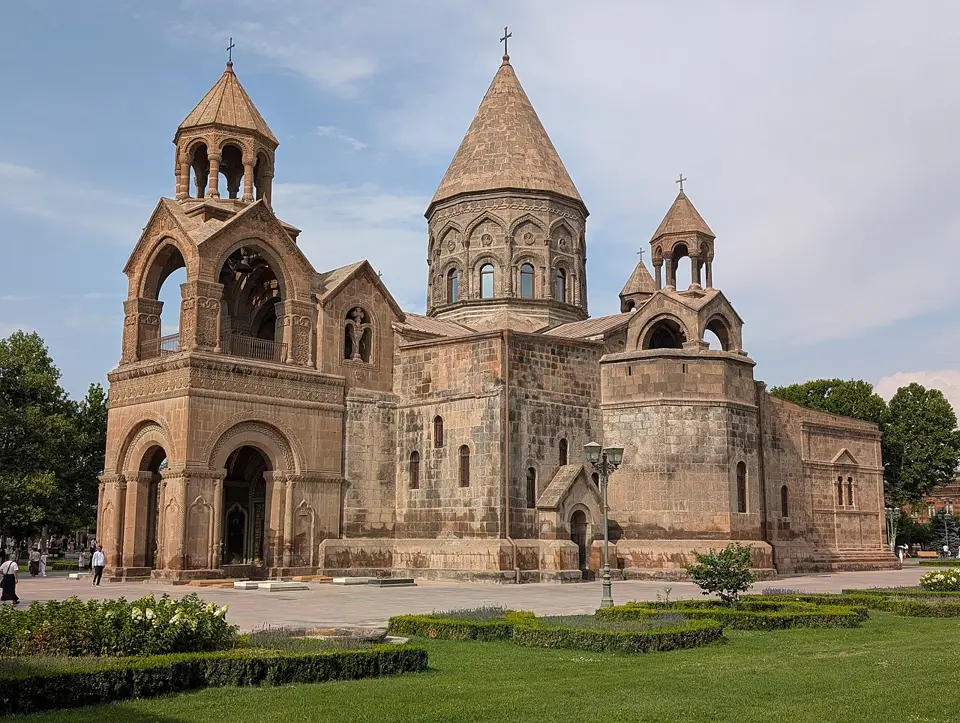
Vagharshapat, Armenia · 4th–present
Etchmiadzin Cathedral is traditionally founded by Gregory the Illuminator after Armenia's conversion, dated in tradition to 301 and by many historians to around 314. It is the Mother See of the Armenian Apostolic Church. The present building is largely 5th–7th century.
Own work. CC BY 4.0 · Wikimedia CommonsThis photograph shows the modern city, or the Wikipedia lead subject, rather than the ancient site itself. Dvin (councils of 506 and 554)
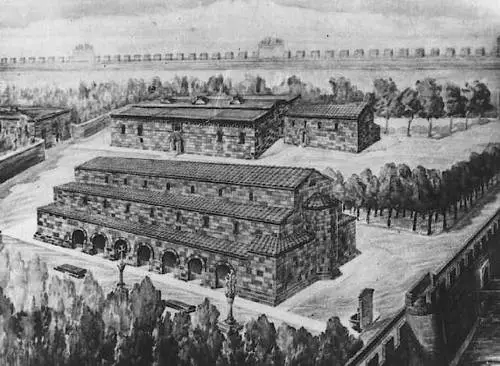
Near Hnaberd, Armenia · 5th–7th
Dvin was the Armenian capital and seat of the catholicos. Its synods of 506 (under Babgen I) and 554 (under Nerses II) rejected Chalcedon and fixed the Armenian church in the anti-Chalcedonian camp. The 554 synod is also tied to the separate Armenian calendar era.
Taken from Russian wiki, source: Great Soviet Encyclopedia. Public domain · Wikimedia CommonsThis photograph shows the modern city, or the Wikipedia lead subject, rather than the ancient site itself.
Also named in earlier place batches: Aksum (see Africa batch); Nubia (see Africa batch); Edessa; Najran (see Persia/Arabia batch).
Spread
It was the majority church in Egypt, strong in Syria and Mesopotamia, and adopted by Armenia (Dvin 506/554), Aksum/Ethiopia, Nubia (Nobadia's mission of 543 under Theodora) and parts of Arabia (Najran). After Justinian's persecutions, Jacob Baradaeus consecrated a parallel hierarchy across Syria and Asia Minor from 542/543.
Books
What happened to it
Imperial attempts at union failed: the Henotikon (482), Justinian's efforts and Monothelitism under Heraclius. After the Arab conquests (630s–640s) the churches survived as large communities under Muslim rule. Today they form the Oriental Orthodox communion (Coptic, Syriac, Armenian, Ethiopian, Eritrean and Malankara Orthodox). Agreed statements with the Eastern Orthodox (1989–1990) and Catholic churches (e.g. 1973, 1984) treat the dispute as largely about terminology.
Churches inside this family
- Coptic Orthodox Church (Miaphysite branch) · thriving
- Syriac Orthodox Church (Miaphysite branch) · survives today
- Armenian Apostolic Church (Miaphysite branch) · thriving
- Ethiopian Orthodox Tewahedo Church (Miaphysite branch) · thriving
Hostile sources
Council of Chalcedon. Definition and acts 451
Hostile.
Leo I. Tome to Flavian (Letter 28) 449
Hostile.
Evagrius Scholasticus. Church History c. 593
Chalcedonian (hostile), but preserves documents.
Their own words
Severus of Antioch. Homiliae cathedrales; letters; Philalethes (Syriac translations) 512–538
Insider.
Philoxenus of Mabbug. Discourses; letters 5th–6th c.
Insider.
John of Ephesus. Ecclesiastical History part III; Lives of the Eastern Saints 6th c.
Insider.
Coptic Church. History of the Patriarchs of Alexandria compiled 10th–11th c.
Insider (late compilation).
Sources
- Monophysites and MonophysitismConfessional source
Catholic Encyclopedia 1913 (confessional). Accessed 2026-11-11.
- Syriac Orthodox Church
e-GEDSH. Accessed 2026-11-11.
- Miaphysitism
Wikipedia. Accessed 2026-11-11.