Coptic Orthodox Church (Miaphysite branch)
Church of Alexandria (non-Chalcedonian), Copts
451 – present
attested. Attested.
Leaders
- Dioscorus I
- Timothy Aelurus
- Theodosius I of Alexandria
- Benjamin I (at the Arab conquest)
Beliefs
Miaphysite Christology after Cyril and Dioscorus. It uses the Coptic language and liturgies (Basil, Gregory and Cyril), and Coptic and Arabic in later centuries.
Home bases
Loading the map…
Alexandria (Coptic Orthodox patriarchate)
Alexandria, Egypt · 5th–present
After Dioscorus was deposed at Chalcedon in 451, most Egyptian Christians and their bishops rejected the council. Rival patriarchs followed: anti-Chalcedonian Timothy Aelurus and Chalcedonian Proterius, who was lynched in 457. The anti-Chalcedonian line became the Coptic Orthodox Church, whose patriarchate later moved to Cairo.
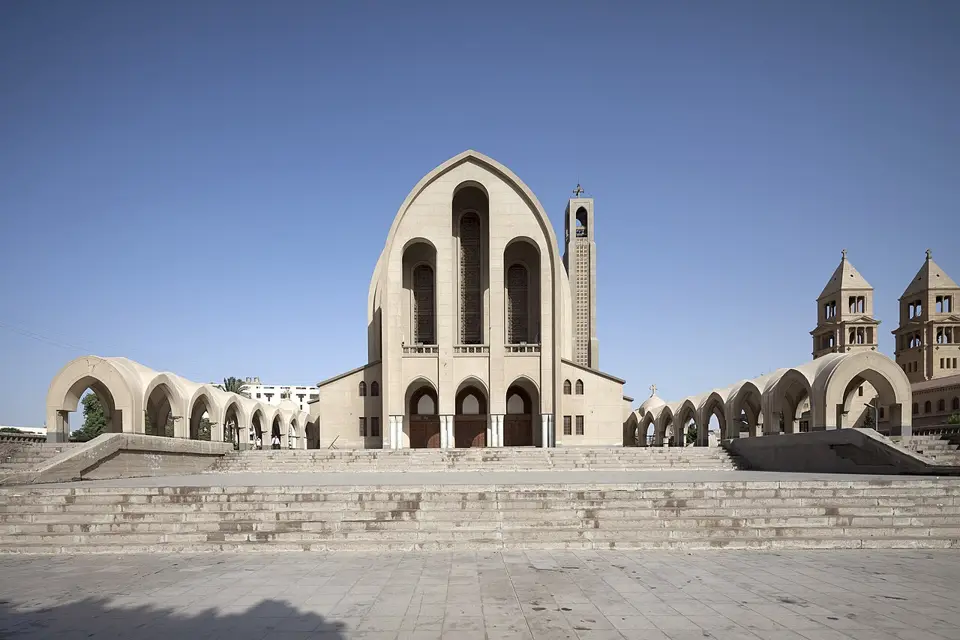
Own work. CC BY-SA 3.0 · Wikimedia CommonsThis photograph shows the modern city, or the Wikipedia lead subject, rather than the ancient site itself.
Also named in earlier place batches: Coptic Egypt places (see Africa batch).
Spread
Egypt, where it became the church of the large majority of Christians, with missions and daughter churches in Nubia and Ethiopia. The Ethiopian church received its metropolitans from Alexandria until 1959.
Books
What happened to it
Survived Byzantine pressure and Arab rule and is the largest Christian church in the Middle East today. Its patriarchal seat is in Cairo, with the historic title in Alexandria.
Hostile sources
Evagrius Scholasticus. Church History c. 593
Chalcedonian.
Their own words
Coptic Church. History of the Patriarchs of Alexandria 10th–11th c.
Insider.
Sources
- Coptic Orthodox Church
Wikipedia. Accessed 2026-11-11.
- Coptic LiteratureConfessional source
Catholic Encyclopedia 1913 (confessional). Accessed 2026-11-11.