city
Hegra (Mada'in Salih)
al-Hijr, near al-Ula, Saudi Arabia · Arabia & Arab frontier
26.798, 37.952
Attested. Jewish and later Christian traces are attested in inscriptions. No evidence places Paul at Hegra.
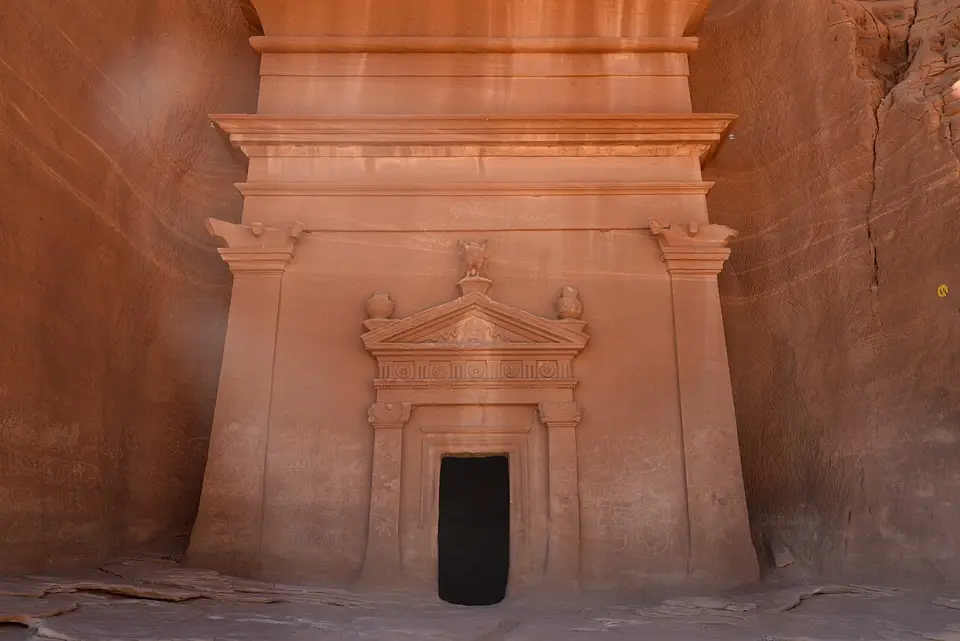
Hegra was the second city of the Nabataean kingdom, with over 100 monumental tombs. A 1st-century tomb inscription names a Jewish owner, and a later text names 'Samuel' of Hegra and of Tayma. Greek Christian inscriptions were found just northwest of the site. It figures as one possible destination in the debate over Paul's 'Arabia'.
Added from later research
abrahamic
Hegra (Mada'in Salih / al-Hijr)
Hegra was the southern Nabataean city, with more than 100 dated monumental tombs. Their inscriptions in Nabataean Aramaic name owners including at least one Jew. A UNESCO site, it is associated in the Qur'an with the people of Thamud (al-Hijr). Later Arabic graffiti here document the script's transition toward Arabic.
attested. The tombs and inscriptions are attested (Healey 1993). The Thamud identification is Qur'anic tradition.
Source stance: neutral. Inscriptions and archaeology.
People and groups named here
- Nabataean tomb owners
Sources
- Pleiades place 814675: Egra/Meda'in Salih
Pleiades Gazetteer (ISAW, NYU). Accessed 2026-11-11.
- Hegra Archaeological Site (al-Hijr / Mada'in Salih) (UNESCO World Heritage List no. 1293)
UNESCO World Heritage Centre. Accessed 2026-11-11.
- Christianity in pre-Islamic Arabia (Wikipedia)
Wikipedia contributors. Accessed 2026-11-11.
Further reading
Councils here
None in this list.