community
Harran ('Inner Harran' tradition)
Harran, Turkey · Mandaeans & Nasoraia (southern Mesopotamia/Khuzestan)
36.864, 39.031
Disputed. ATTESTED: the Haran Gawaita text and Harran's Sabian community. DISPUTED: whether 'Inner Harran' is this city (it may mean Hauran or Media), and the migration story itself, which Lupieri rejects and Macuch and Buckley accept. Scholars generally consider the Sabians of Harran a separate group from the Mandaeans.
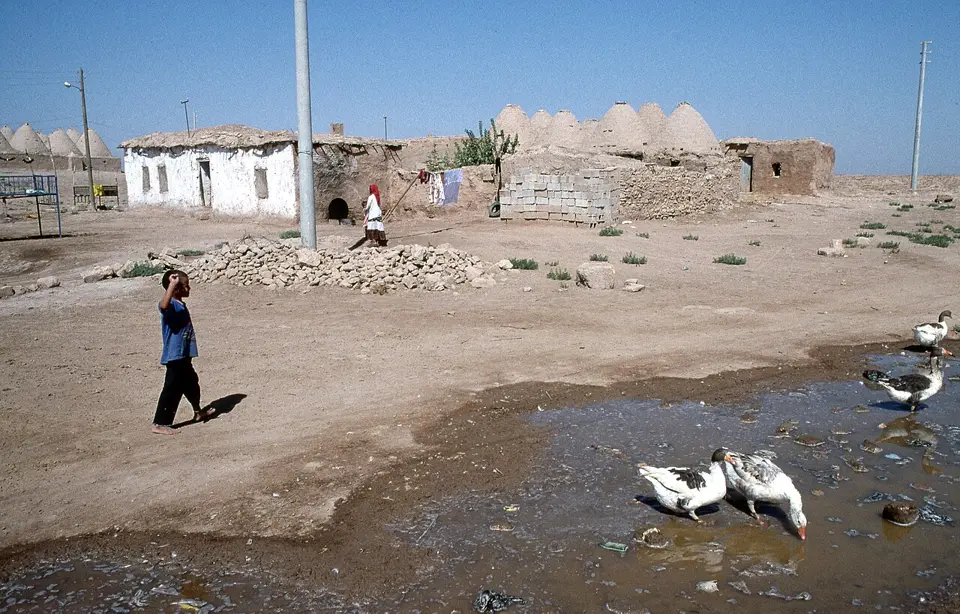
The Mandaean Haran Gawaita tells of Nasoraeans leaving Jerusalem and settling in 'Inner Harran, which is called the mountains of the Medes'. Whether this means Harran in upper Mesopotamia, the Hauran, or Media is unclear. Harran was also home to the pagan 'Sabians of Harran', who were often confused with the Mandaean 'Sabians'.
Added from later research
abrahamic
Harran
In Genesis, Harran is where Abraham's family settled before Canaan (Gen 11–12). It was a centre of the moon god Sin. Late-antique Christians called it Hellenopolis ('pagan city'). Its 'Sabians' kept a pagan philosophical-astral cult under Islam until the 11th century. Edessa is nearby (Persia batch).
attested. The city and Sabians are attested. Abraham's sojourn is traditional (biblical). Whether 'Sabian' was an adopted label is debated.
Source stance: insider. Haran Gawaita is a Mandaean insider text. Medieval Arabic accounts of the Harranian Sabians are neutral to hostile.
People and groups named here
- Nasoraeans of the Haran Gawaita
- Thabit ibn Qurra (Harranian Sabian scholar, 9th century)
- Abraham (traditional)
- Nabonidus
- Thabit ibn Qurra
Sources
- MANDAEANS i. History
Edmondo F. Lupieri, Encyclopaedia Iranica (2008, upd. 2018). Accessed 2026-11-11.
- Haran Gawaita (Wikipedia)
Wikipedia contributors. Accessed 2026-11-11.
- ḤARRĀN
Encyclopaedia Iranica. Accessed 2026-11-11.
- Pleiades place 658427: Harran/Carrhae
Pleiades Gazetteer (ISAW, NYU). Accessed 2026-11-11.
- Harran (Wikipedia)
Wikipedia contributors (CC BY-SA 4.0). Accessed 2026-11-11.
Further reading
Councils here
None in this list.