Resafa (Sergiopolis), shrine of St Sergius
c. c. 500 – c. 750
Place: resafa
35.628, 38.756 · On the map
The site, inscriptions and texts are attested. The Umayyad caliph Hisham later lived there, so the site runs on into the Islamic period.
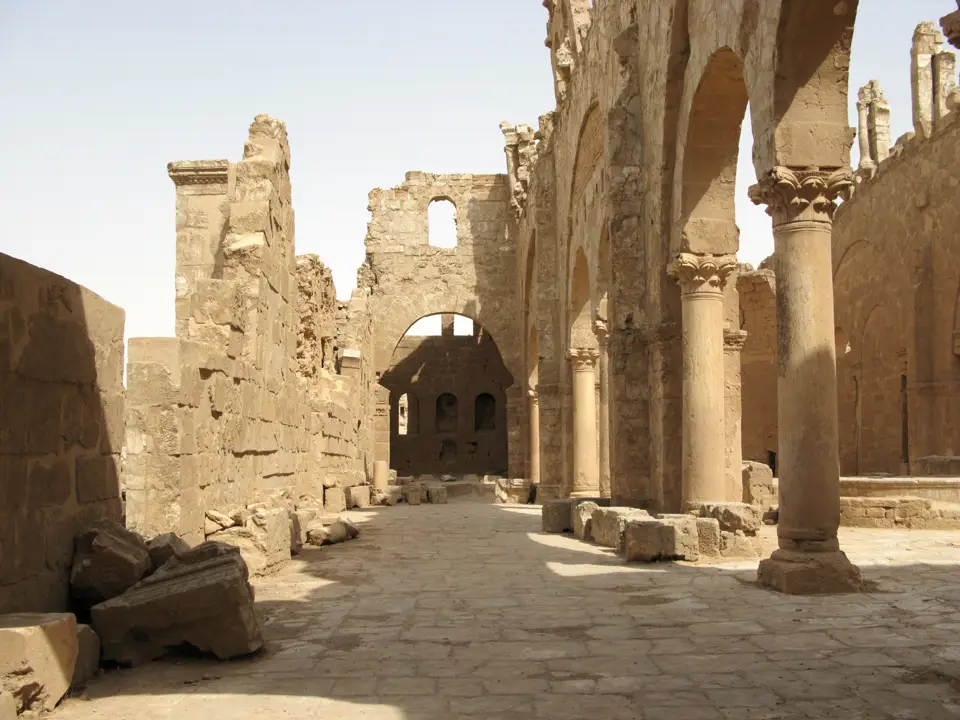
The desert shrine of the soldier-martyr Sergius drew Arab nomads from both empires. Persian Christian queens and kings sent gifts to it, and the Ghassanid al-Mundhir built an audience hall outside its walls. Fowden calls Sergius the 'patron saint of the Arabs', and the shrine shows Christianity becoming part of the culture of steppe Arabs.
People named here
- Sergius
- al-Mundhir ibn al-Harith
- Khosrow II
Where scholars disagree
For
- Elizabeth Key Fowden — The Barbarian Plain (1999)
Against
No names on this side.
Links
People and office
In
Ghassanids: Christian Arab kings for Byzantium (al-Jabiya)
Al-Mundhir's audience hall at Resafa; the Arab cult of Sergius.
patron_of
attested
Context
In
al-Nu'man III, last Lakhmid king, becomes Christian
The Sergius cult was shared across Lakhmid and Ghassanid Arabs and the Persian court.
context
attested
Sources
- Elizabeth Key Fowden, The Barbarian Plain: Saint Sergius between Rome and Iran (1999)
University of California Press. Accessed 2026-11-11.
- Wikipedia: Resafa
Wikipedia contributors (CC BY-SA 4.0). Accessed 2026-11-11.