Tatian's Diatessaron (single harmonized gospel)
c. c. 170 – c. 450
Place: edessa
37.150, 38.782 · On the map
Its Syriac use is attested; Ephrem wrote a commentary on it. The idea that a Diatessaron-type gospel shaped the Qur'anic 'Injil' is a scholarly hypothesis. The Arabic Diatessaron itself is later (c. 11th c.).
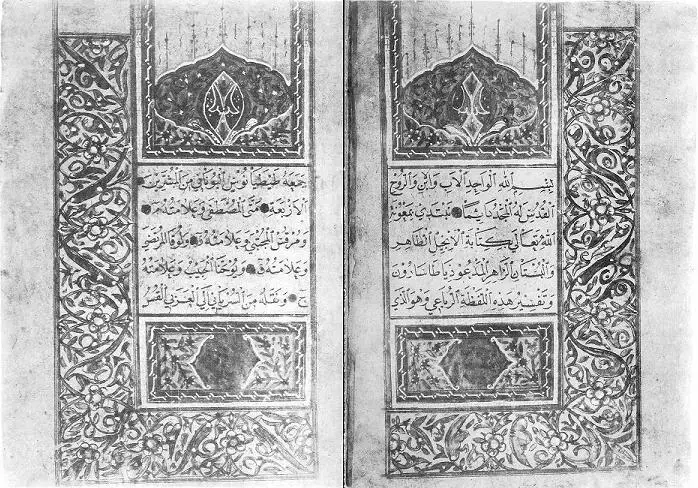
Tatian, a Syrian student of Justin, wove the four gospels into one continuous story around 170. In Syriac churches it was the standard gospel until bishops such as Rabbula of Edessa and Theodoret replaced it with the separate gospels in the 5th century. The Qur'an speaks of 'the Gospel' (al-injil) in the singular.
People named here
- Tatian
- Ephrem the Syrian
- Rabbula
- Theodoret of Cyrrhus
Where scholars disagree
For
- Jan M. F. Van Reeth — 'L'Évangile du Prophète' (2004): Muhammad's community knew a Diatessaron-type gospel
- Emran El-Badawi — The Qur'an and the Aramaic Gospel Traditions (2014): the Qur'an engages Aramaic gospel traditions
Against
- Sidney H. Griffith — The Bible in Arabic (2013): no written pre-Islamic Arabic gospel; knowledge was oral
Links
Influence
Out
Hypothesis: a single harmonized 'Injil' lies behind the Qur'an's singular Gospel.
influenced
scholarly hypothesis
Sequence
Out
Peshitta (standard Syriac Bible)
In the 5th century, bishops (Rabbula, Theodoret) replaced the Diatessaron with the separate Peshitta gospels.
replaced_by
attested
Report and reading
Out
Ephrem wrote a commentary on the Diatessaron.
commented_by
attested
Sources
- Tatian, Diatessaron (Arabic version, ANF vol. 9 trans. Hill/Hogg, PD)
New Advent. Accessed 2026-11-11.
- Wikipedia: Diatessaron
Wikipedia contributors (CC BY-SA 4.0). Accessed 2026-11-11.
- Jan M. F. Van Reeth, 'L'Évangile du Prophète', in Al-Kitab: La sacralité du texte dans le monde de l'Islam (Acta Orientalia Belgica Subsidia 3, 2004)
Société belge d'études orientales (series page). Accessed 2026-11-11.
- Emran Iqbal El-Badawi, The Qur'an and the Aramaic Gospel Traditions (2014)
Routledge. Accessed 2026-11-11.