Monarchians / Sabellians (Modalists)
Patripassians, Noetians, Sabellians, Modalists
late 2nd – 4th century
attested. The figures are attested, but only through hostile writers.
Hostile sources only. No writing from inside this group is known. Teachings and morals here are the opponents' account unless another source confirms them.
Leaders
- Noetus of Smyrna
- Praxeas
- Epigonus
- Cleomenes
- Sabellius
Beliefs
To protect the one rule (monarchia) of God, modalists held that Father, Son and Spirit are names or modes of one divine person, so the Father himself became incarnate and suffered (hence 'Patripassians'). A separate 'dynamic' monarchianism (Theodotus the Cobbler, Paul of Samosata) saw Jesus as a man empowered by God; see the Paulianists.
Home bases
Loading the map…
Smyrna (Noetus)
İzmir, Turkey · 2nd–3rd
Noetus of Smyrna (late 2nd c.) taught that the Father and Son were one and the same God, who was born, suffered and died. Local presbyters expelled him. Hippolytus wrote Against Noetus, and his pupil Epigonus brought the teaching to Rome.
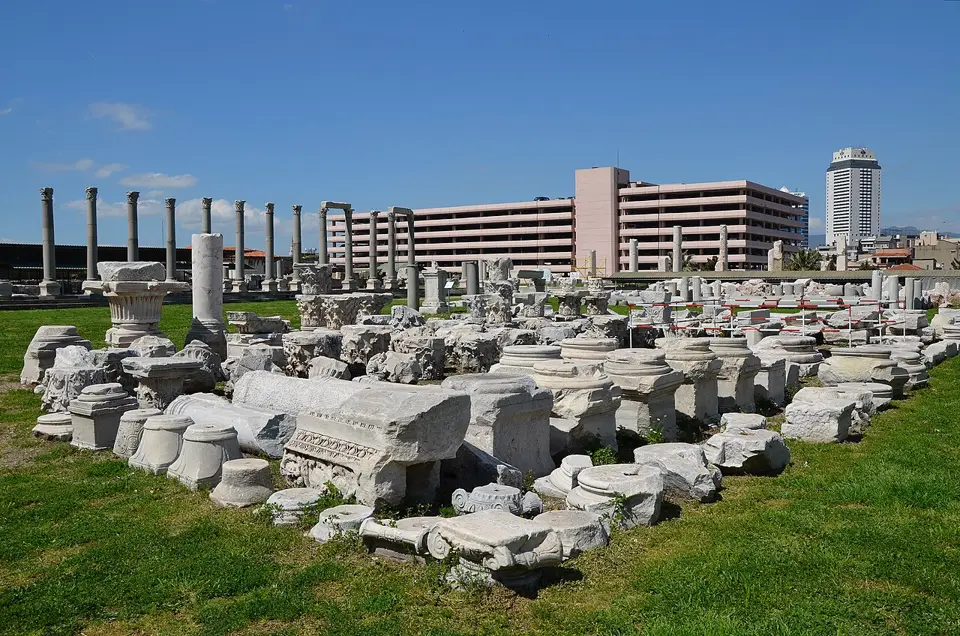
Agora of Smyrna, built during the Hellenistic era at the base of Pagos Hill and totally rebuilt under Marcus Aurelius after the destructive 178 AD earthquake, Izmir, Turkey. CC BY-SA 2.0 · Wikimedia CommonsThis photograph shows the modern city, or the Wikipedia lead subject, rather than the ancient site itself. Rome (Sabellius and the Monarchian dispute, c. 200–220)
Rome, Italy · 3rd
Rome became the main stage for 'Monarchian' teaching: Praxeas, Epigonus, Cleomenes and then Sabellius, who was excommunicated by Pope Callistus around 220. Hippolytus accused Popes Zephyrinus and Callistus of sympathizing with it, which shows how contested the issue was in Rome itself.
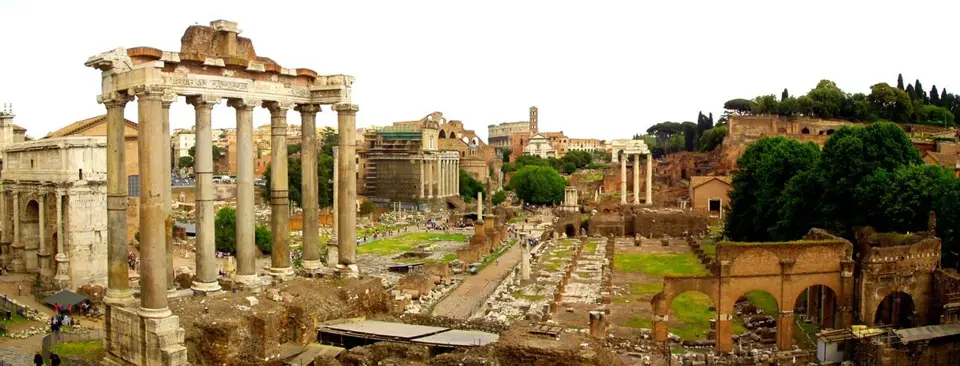
. CC BY-SA 3.0 · Wikimedia Commons Ptolemais, Libyan Pentapolis (Sabellianism, 260s)
Tolmeita, Libya · 3rd
Dionysius of Alexandria complained in the 260s that Sabellian teaching was spreading among the bishops of the Libyan Pentapolis. His sharp reply drew a complaint to Dionysius of Rome, the first recorded Alexandria–Rome dispute over Trinitarian language.
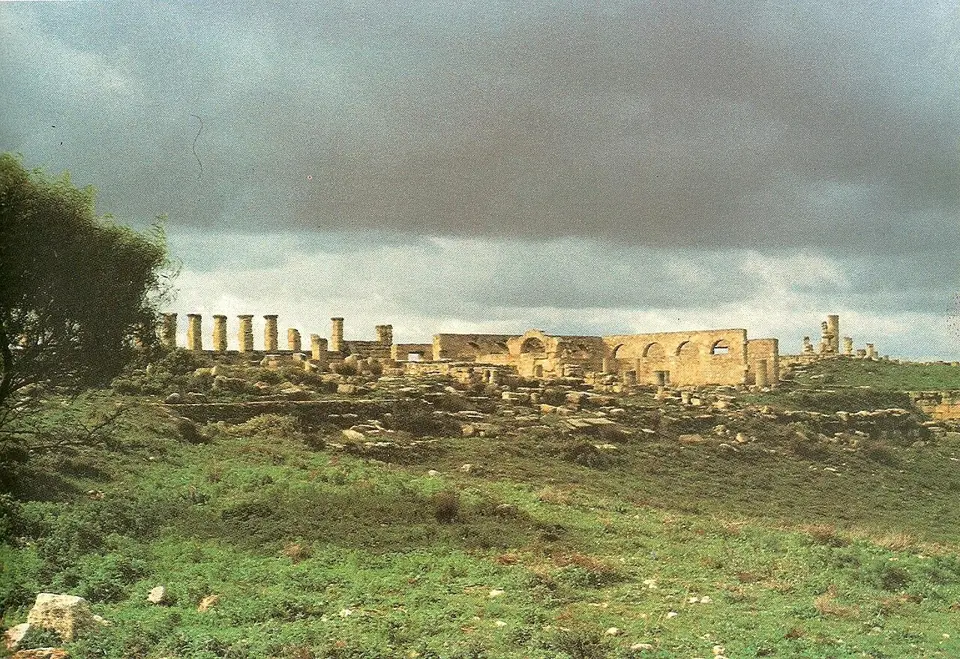
Al Lajna ash Sha'biya li Baladiya al Bayan al Awwal (Banghazi), Ad Daleel as Siyahi li Madina Benghazi, Starf fotolito pub., Rome, 1984.. Public domain · Wikimedia CommonsThis photograph shows the modern city, or the Wikipedia lead subject, rather than the ancient site itself.
Spread
Asia Minor, Rome, North Africa and the Libyan Pentapolis. 'Sabellian' became a general insult in 4th-century debates.
Books
None linked.
What happened to it
Condemned in Rome around 220 and repeatedly thereafter. The views survived as a label rather than a church.
Hostile sources
Hippolytus. Against Noetus; Refutation IX c. 200–235
Hostile.
Tertullian. Against Praxeas c. 200–210
Hostile; NewAdvent ANF translation (public domain).
Epiphanius of Salamis. Panarion 57, 62 c. 374–377
Hostile and often careless with groups he never met; no public-domain English translation located (F. Williams translation is in copyright). Link is an overview, not the text.
Their own words
No insider source is known.
Sources
- MonarchiansConfessional source
Catholic Encyclopedia 1913 (confessional). Accessed 2026-11-11.
- Sabellianism
Wikipedia. Accessed 2026-11-11.