Peshitta (standard Syriac Bible)
c. c. 150 – c. 450
Place: edessa
37.150, 38.782 · On the map
The text is attested; many manuscripts survive, such as the Rabbula Gospels of 586 in Florence. The vocabulary influence is widely accepted, but particular cases are debated.
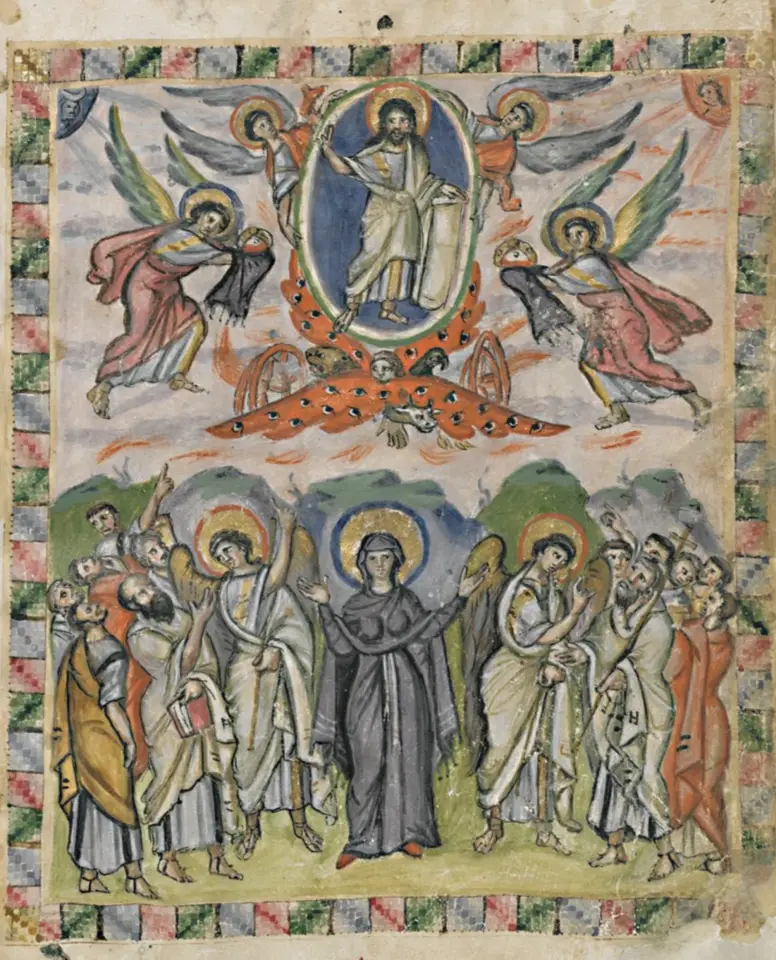
The Peshitta became the common Bible of all Syriac churches by the 5th century, with separate gospels replacing the Diatessaron. Through Syriac clergy, its wording and the stories around it fed into the language Arab Christians used for scripture. Scholars look to it for the source of Qur'anic religious vocabulary.
People named here
- Rabbula of Edessa
Where scholars disagree
For
- Sidney H. Griffith — The Bible in Arabic (2013)
- Emran El-Badawi — The Qur'an and the Aramaic Gospel Traditions (2014)
Against
No names on this side.
Links
Text and wording
Out
Qur'an 61:6 ('a messenger after me named Ahmad') and the Paraclete
Ibn Ishaq's quotation of John 15 is in Christian Palestinian Aramaic wording.
text_parallel
attested
Sequence
In
Tatian's Diatessaron (single harmonized gospel)
In the 5th century, bishops (Rabbula, Theodoret) replaced the Diatessaron with the separate Peshitta gospels.
replaced_by
attested
Context
Out
Was there an Arabic Bible before Islam?
Arab Christians mostly heard scripture in Syriac (Peshitta), not Arabic.
context
scholarly hypothesis
Sources
- Wikipedia: Peshitta
Wikipedia contributors (CC BY-SA 4.0). Accessed 2026-11-11.
- Sidney H. Griffith, The Bible in Arabic: The Scriptures of the 'People of the Book' in the Language of Islam (2013)
Princeton University Press. Accessed 2026-11-11.