Ghassanids: Christian Arab kings for Byzantium (al-Jabiya)
c. c. 500 – 636
Place: jabiya
32.919, 35.997 · On the map
Supported by Procopius, John of Ephesus, Syriac documents and inscriptions. Contacts with Muhammad are traditional.
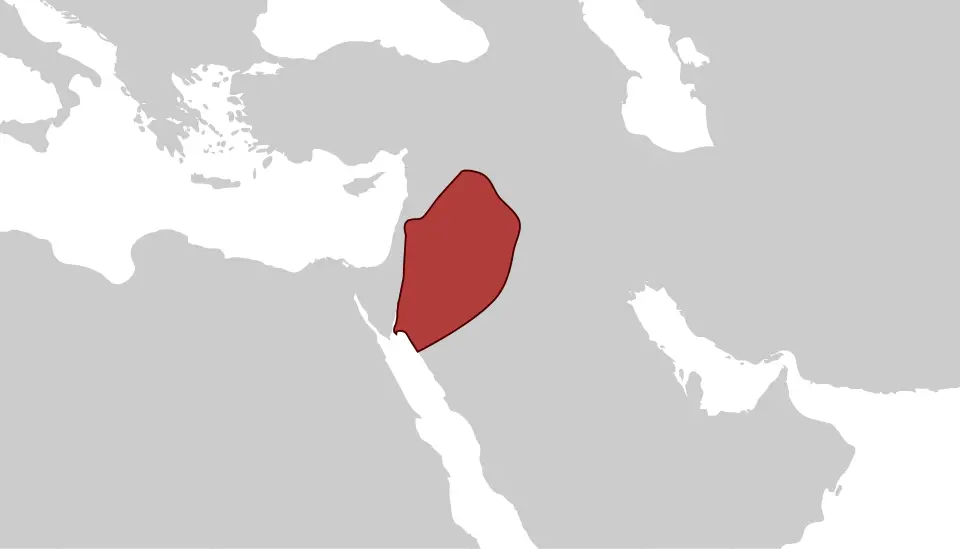
The Ghassanid clan of Jafna were Byzantium's Arab allies, and their center was at al-Jabiya in the Golan. Justinian made al-Harith ibn Jabala supreme phylarch in about 529. The Ghassanids were committed Miaphysites who sponsored bishops, monasteries and the cult of St Sergius, and Arabic poets visited their courts. Muslim tradition has Muhammad's envoys and early raids (Mu'ta 629) meeting them.
People named here
- al-Harith ibn Jabala
- al-Mundhir ibn al-Harith
- Jabala ibn al-Ayham
Where scholars disagree
For
- Irfan Shahîd — Byzantium and the Arabs in the Sixth Century (1995–2010)
- Greg Fisher — Between Empires (2011)
Against
No names on this side.
Links
People and office
Out
Jacob Baradaeus and the Miaphysite church network
Al-Harith ibn Jabala asked for Jacob's consecration (542).
sponsored
attestedOut
Resafa (Sergiopolis), shrine of St Sergius
Al-Mundhir's audience hall at Resafa; the Arab cult of Sergius.
patron_of
attested
Sequence
Out
Tabuk expedition: pacts with Christian Ayla and Dumat al-Jandal
Muhammad's northern campaigns (Mu'ta 629, Tabuk 630) met Ghassanid-allied Christian Arabs.
contemporary_with
traditional
Context
Out
Pre-Islamic Christian inscriptions in Arabic script (Zabad 512, Jabal Usays 528, Harran 568)
The Harran (568) martyrium inscription is a Ghassanid-era Christian Arabic text.
context
attestedIn
Council of Chalcedon (451): Christ 'in two natures'
The Ghassanids championed the anti-Chalcedonian (Miaphysite) side.
context
attested
Sources
- Wikipedia: Ghassanids
Wikipedia contributors (CC BY-SA 4.0). Accessed 2026-11-11.
- Greg Fisher, Between Empires: Arabs, Romans, and Sasanians in Late Antiquity (2011)
Oxford University Press. Accessed 2026-11-11.