Ephrem the Syrian
c. c. 306 – 373
Place: edessa
37.150, 38.782 · On the map
His life and works are attested. Influence on the Qur'an's eschatology is a scholarly hypothesis going back to Tor Andrae.
Named scholars here are as cited in the handoff, not a new survey.
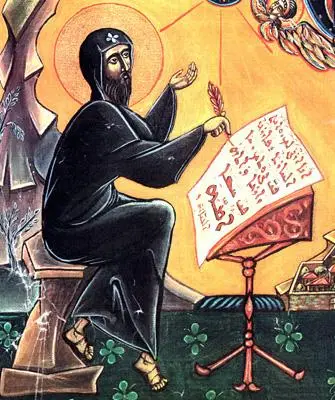
Ephrem is the greatest Syriac poet-theologian. He moved from Nisibis to Edessa when Rome gave Nisibis to Persia in 363. His hymns on paradise, judgment and Mary shaped the Syriac preaching that Arab Christians heard, and that is why scholars go back to him when comparing Qur'anic imagery.
People named here
- Ephrem the Syrian
Where scholars disagree
For
- Tor Andrae — Der Ursprung des Islams und das Christentum (1926): Syriac preaching shaped Qur'anic eschatology
Against
- François de Blois — review of Luxenberg, JQS 5 (2003): rejects radical Syriac re-readings (e.g., 'houris' as grapes) while not denying a Syriac milieu (title as cited in literature; not re-checked this turn)
Links
Place
Out
School of the Persians at Edessa
Ephrem taught in Edessa after 363; the school traces itself to him.
located_at
traditional
Influence
Out
Syriac Marian and paradise poetry as a background to Qur'anic imagery (Andrae).
influenced
scholarly hypothesis
Report and reading
In
Tatian's Diatessaron (single harmonized gospel)
Ephrem wrote a commentary on the Diatessaron.
commented_by
attested
Sources
- Wikipedia: Ephrem the Syrian
Wikipedia contributors (CC BY-SA 4.0). Accessed 2026-11-11.
- Encyclopaedia Iranica, 'Edessa'
Encyclopaedia Iranica Foundation. Accessed 2026-11-11.