Sethians (Sethian Gnostics; "Gnostikoi")
Gnostics (self-designation per Irenaeus/Porphyry), Barbelognostics, Archontics (related), Sethoites
2nd – 4th century
disputed. The texts are attested. 'Sethianism' as a label for them is a modern scholarly category (Schenke), and whether there was ever a distinct Sethian community, rather than a shared literary tradition, is disputed (M. A. Williams 1996; K. King 2003).
Leaders
- No known founder; revelations attributed to Seth, Zostrianos, Allogenes, Norea, Marsanes
Beliefs
An unknowable Invisible Spirit and its first thought, Barbelo, generate a divine world. The lower creator, Yaldabaoth, is an ignorant offspring of Sophia who imprisons divine light in human bodies. Seth, the son of Adam, is the ancestor and saviour of an incorruptible 'seed' or 'race', and some texts describe ascents of the soul through visionary stages that overlap with Platonist philosophy.
Home bases
Loading the map…
Alexandria (Basilides, Carpocrates, early Valentinus)
Alexandria, Egypt · 2nd
Alexandria was home to the first named Christian teachers we know of outside the New Testament: Basilides (fl. c. 120–140), Carpocrates and his son Epiphanes, and the young Valentinus. Clement of Alexandria preserves fragments of their writings, which makes the city the best-documented centre of 2nd-century 'Gnostic' teaching.

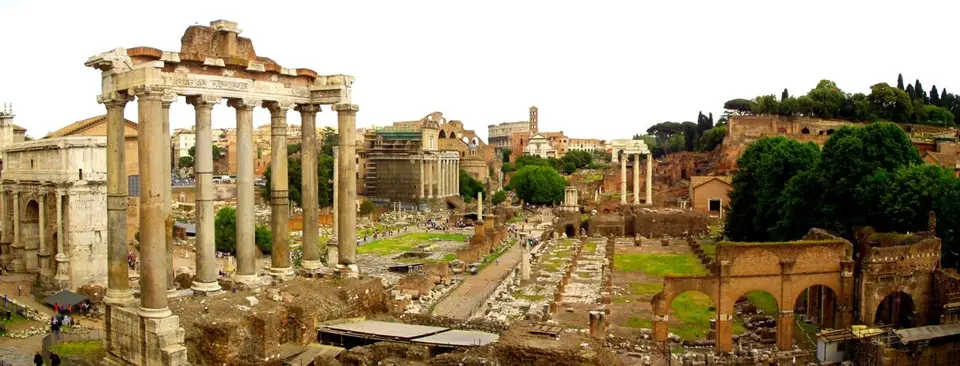
Own work. CC BY-SA 3.0 · Wikimedia CommonsThis photograph shows the modern city, or the Wikipedia lead subject, rather than the ancient site itself. Rome (Plotinus's circle meets the Gnostics, 260s)
Rome, Italy · 3rd
Porphyry records that Christian 'Gnostics' in Plotinus's Roman circle used revelations called Zostrianos and Allogenes. Copts of those very titles turned up at Nag Hammadi. Plotinus wrote Ennead II.9 against them, and Porphyry and Amelius wrote refutations.
. CC BY-SA 3.0 · Wikimedia Commons Nag Hammadi (Jabal al-Tarif codices, found 1945)
Nag Hammadi, Egypt · 4th
In December 1945 farmers found a jar near Jabal al-Tarif holding 13 Coptic codices (12 books and leaves of a 13th) with 52 tractates. They include most surviving Sethian and Valentinian texts. The books were probably made in the mid-4th century, and their cartonnage includes dated papyri from the 340s.
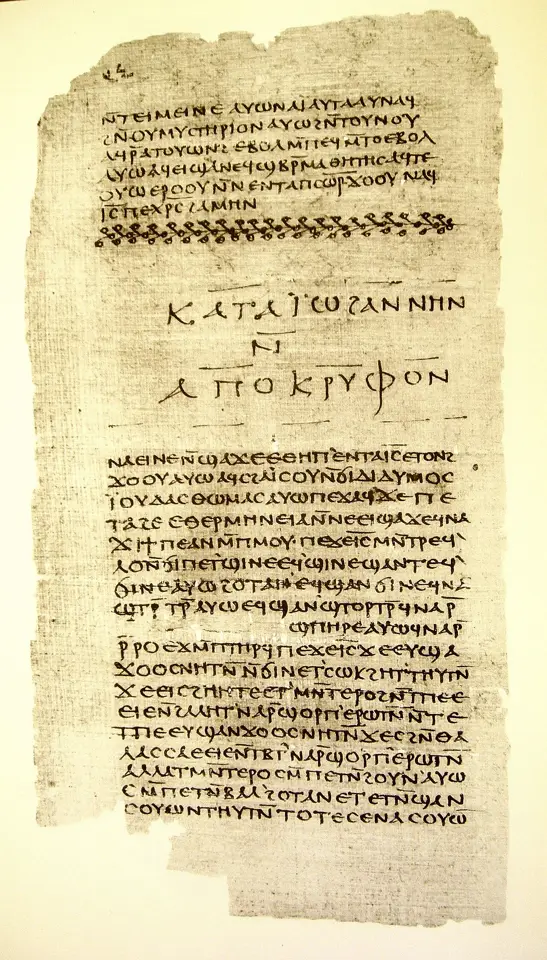
http://www.biblical-data.org/coptic/coptic_MSS.html. Public domain · Wikimedia Commons
Spread
Texts later called 'Sethian' circulated in Greek in the 2nd–3rd centuries (Irenaeus I.29–30 summarizes an Apocryphon of John-type myth around 180). Users were in Rome in Plotinus's circle in the 260s, and the texts were translated into Coptic and copied in 4th-century Egypt. Epiphanius met related 'Gnostics' and 'Archontics' in Egypt and Palestine.
Books
What happened to it
These revelations no longer circulated after the 4th–5th centuries. Some survived in Coptic codices (Nag Hammadi, Berlin, Tchacos), and their myth fed into later systems such as the Mandaean and Manichaean ones, though this influence is debated.
Hostile sources
Irenaeus of Lyon. Against Heresies I.29–30 c. 180
Hostile; earliest systematic heresiology; ANF translation (public domain).
Hippolytus of Rome (attrib.). Refutation of All Heresies V.19–22 c. 222–235
Hostile; ANF translation (public domain). Authorship disputed.
Epiphanius of Salamis. Panarion 26, 39, 40 c. 374–377
Hostile and often careless with groups he never met; no public-domain English translation located (F. Williams translation is in copyright). Link is an overview, not the text.
Plotinus. Ennead II.9 "Against the Gnostics" c. 265
Hostile (pagan philosophical).
Porphyry. Life of Plotinus 16 c. 301
Hostile (pagan); names Zostrianos and Allogenes.
Their own words
Nag Hammadi, Berlin and Tchacos codices. Apocryphon of John; Hypostasis of the Archons; Holy Book of the Great Invisible Spirit; Apocalypse of Adam; Three Steles of Seth; Zostrianos; Marsanes; Allogenes; Trimorphic Protennoia; Melchizedek; Thought of Norea; Gospel of Judas 2nd–4th c.
Insider texts; "Sethian" grouping is modern (H.-M. Schenke 1974/1981).
Sources
- GnosticismConfessional source
Catholic Encyclopedia 1913 (confessional). Accessed 2026-11-11.
- Sethianism
Wikipedia. Accessed 2026-11-11.