Manichaeans
Religion of Light (Mingjiao, China), Dēnāwarīya (eastern branch), Zandīks (Persian/Arabic pejorative), Elect and Hearers
240 (Mani's public mission) – 16th century (Fujian)
attested. This is the best-attested 'heresy' thanks to large finds of insider texts. Details of Mani's biography come partly from hagiographic insider sources such as the CMC. The extent of Buddhist influence and the identity of his childhood baptist community are debated.
Leaders
- Mani (216–274/277)
- Mar Ammo (mission to the east)
- Adda and Pattig (mission to the Roman west)
- Sisinnios (successor)
- Faustus of Milevis
- Bögü Qaghan (Uyghur royal convert)
Beliefs
Two eternal principles, Light and Darkness, became mixed when Darkness attacked, and the cosmos is a machine for freeing the trapped particles of light. Mani presented himself as the Paraclete and seal of the prophets after Zoroaster, the Buddha and Jesus. The church was divided into celibate, vegetarian Elect, whose ritual meals freed light, and Hearers who supported them. The scriptures were written by Mani himself.
Home bases
Loading the map…
Seleucia-Ctesiphon (cross-reference)
Al-Mada'in, Iraq · 3rd–8th
This is a cross-reference only. Seleucia-Ctesiphon, seat of the Catholicos of the Church of the East and of Mani's early mission at the Sasanian court, is covered in the Persia places batch.
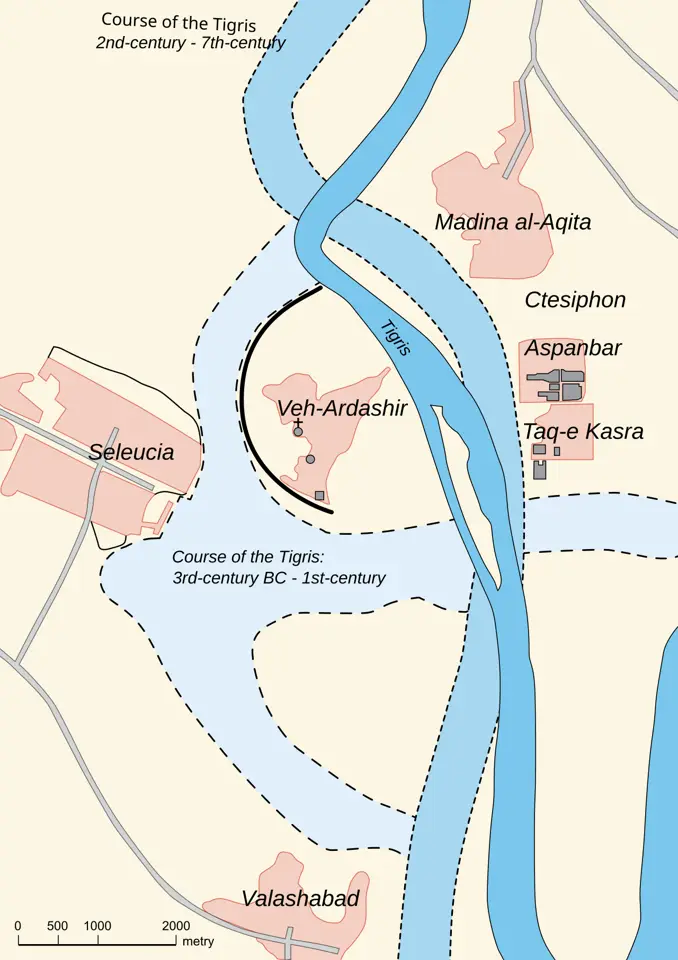
This file was derived from: Seleucia map-pt.svg:. CC BY-SA 3.0 · Wikimedia CommonsThis photograph shows the modern city, or the Wikipedia lead subject, rather than the ancient site itself. Southern Mesopotamia / Mesene (the baptists Mani grew up among)
Maysan region, Iraq · 3rd–10th
Approximate location.
The Cologne Mani Codex says Mani grew up from age 4 to 24 in a baptist community that traced its rule to 'Alchasaios'. Ibn al-Nadim (10th c.) places the Mughtasila ('those who wash') in the marshes of southern Iraq. The coordinates mark the Mesene region, not a known settlement.
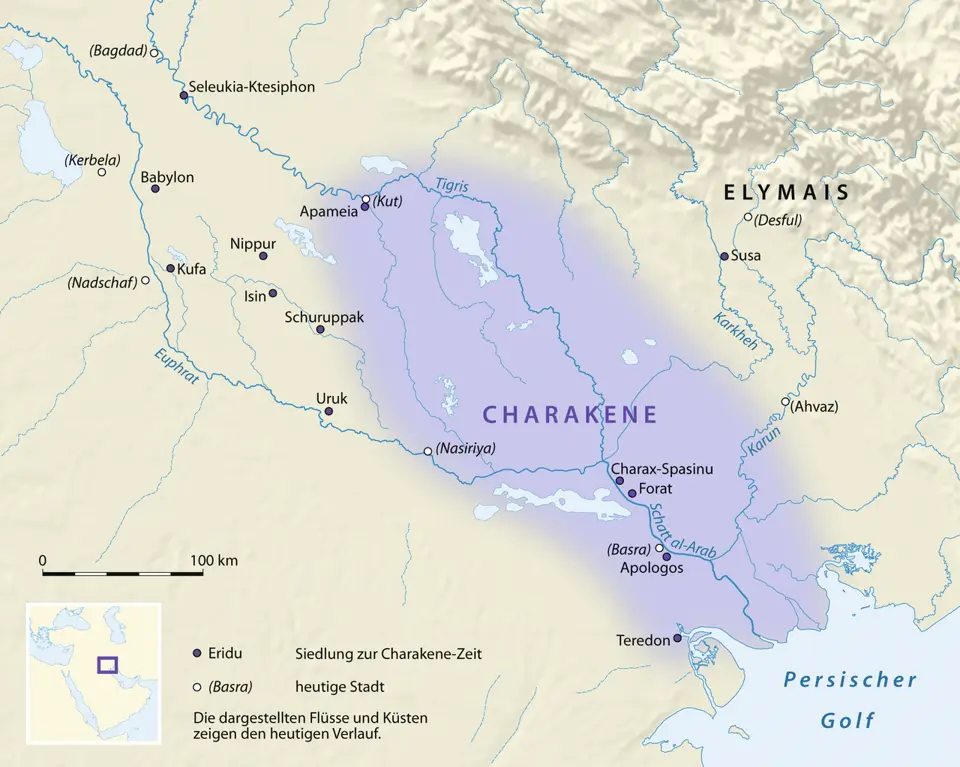
self-made, using GTOPO-30 Elevation Data by USGS. CC BY 3.0 · Wikimedia CommonsThis photograph shows the modern city, or the Wikipedia lead subject, rather than the ancient site itself. Lycopolis (Asyut)
Asyut, Egypt · 3rd–4th
Lycopolis was an early Manichaean centre in Upper Egypt. Around 300 the Platonist Alexander of Lycopolis wrote a philosophical critique of Manichaeism here, and the Coptic Manichaean texts are in the Lycopolitan (Subachmimic) dialect. Melitius, founder of the Melitian schism, was bishop of the same city.
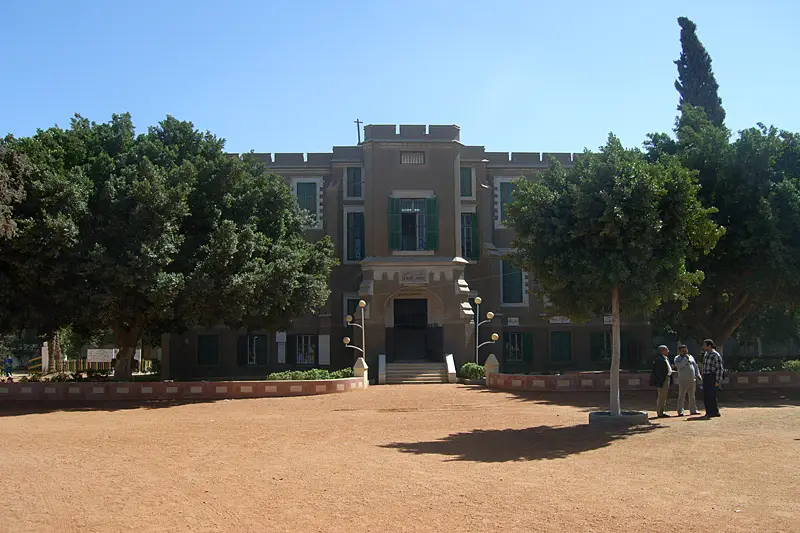
Own work. CC BY-SA 3.0 · Wikimedia CommonsThis photograph shows the modern city, or the Wikipedia lead subject, rather than the ancient site itself. Kellis (Ismant el-Kharab, Dakhla Oasis)
Ismant el-Kharab, Egypt · 4th
Excavations by the Dakhleh Oasis Project since 1986 uncovered houses where 4th-century Manichaean lay 'hearers' lived. Finds there include Coptic, Greek and Syriac letters, psalms and accounts, and a codex of Isocrates on wooden boards. They are the only archaeologically excavated Manichaean community texts from the Roman Empire.
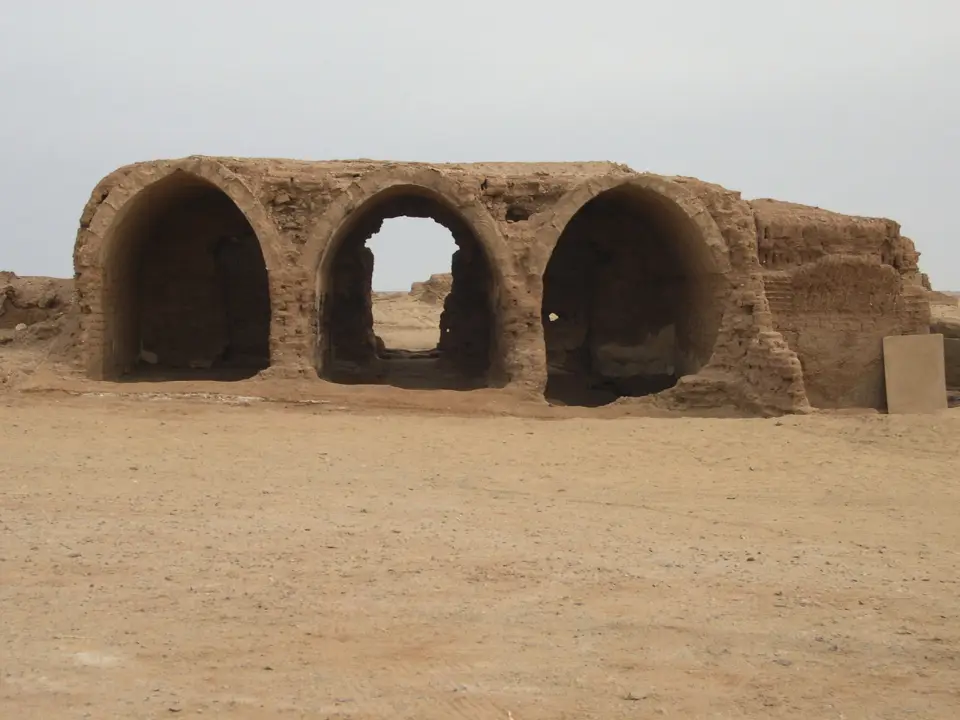
Kellis 2004 (XXXIX). CC BY 2.0 · Wikimedia CommonsThis photograph shows the modern city, or the Wikipedia lead subject, rather than the ancient site itself. Medinet Madi (Narmouthis), Fayum: the 1929 codices
Medinet Madi, Egypt · 4th
In 1929 a group of Coptic Manichaean papyrus codices was found here or nearby. They include the Kephalaia, the Psalm-Book, the Homilies, the Synaxeis and letters. Carl Schmidt bought them for Berlin, and Alfred Chester Beatty bought them for Dublin, so the find is now split between the two cities.
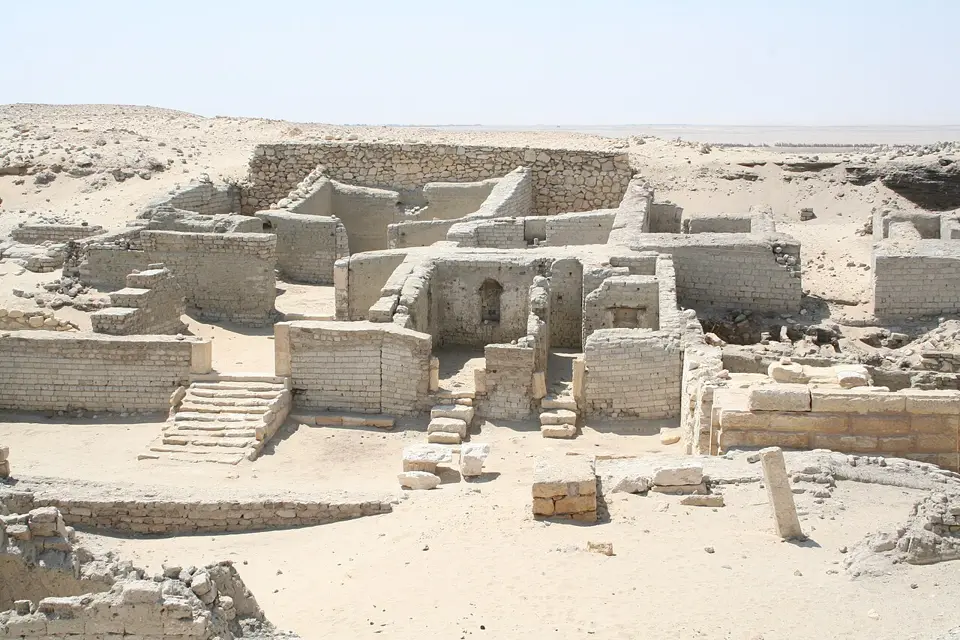
Own work. CC BY-SA 3.0 · Wikimedia CommonsThis photograph shows the modern city, or the Wikipedia lead subject, rather than the ancient site itself. Carthage (Faustus of Milevis and Augustine)
Tunis area, Tunisia · 4th
Augustine was a Manichaean hearer from about 373 to 382 and met the Manichaean bishop Faustus of Milevis in Carthage around 383. Augustine's Reply to Faustus quotes Faustus's Capitula at length, preserving much of a lost insider work.
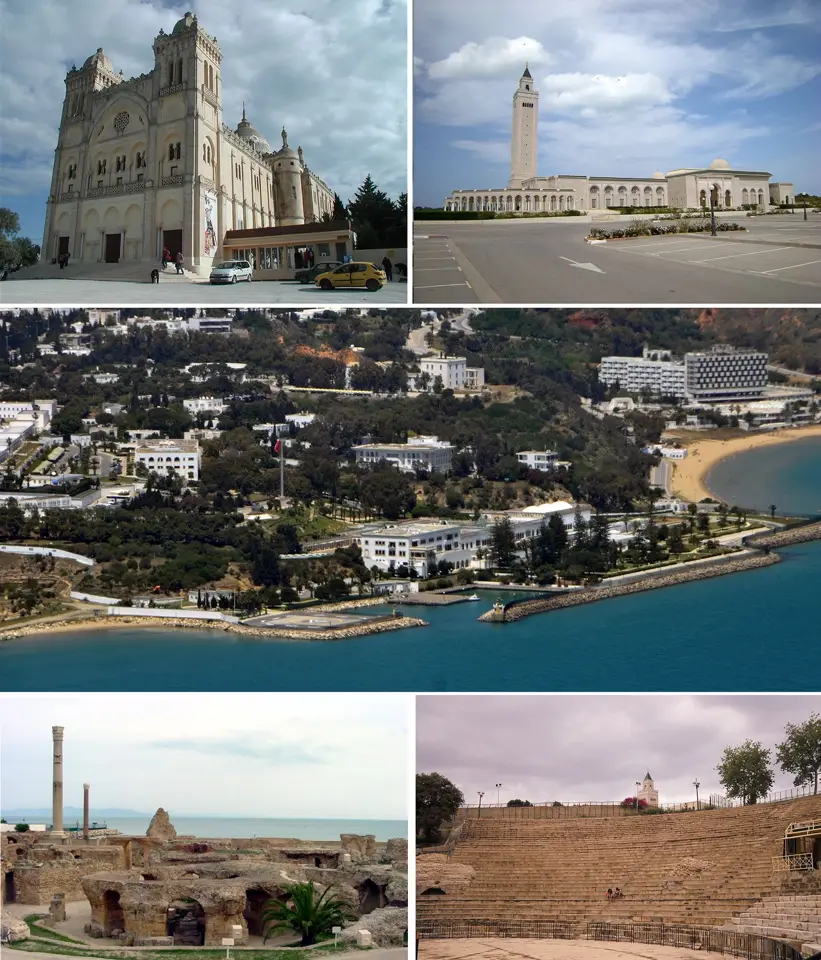
Author: Citizen59 Author: Issam Barhoumi Author: Leandro Neumann Ciuffo Author: Patrick Verdier Author: nonanet. CC BY-SA 3.0 · Wikimedia CommonsThis photograph shows the modern city, or the Wikipedia lead subject, rather than the ancient site itself. Theveste (Tebessa): Latin Manichaean codex
Tébessa, Algeria · 4th–5th
Leaves of a Latin Manichaean parchment codex were found in a cave near Tebessa in 1918. They discuss the two grades of the church, the elect and the hearers. They are the only direct Latin Manichaean text from North Africa, where Augustine spent nine years as a hearer.
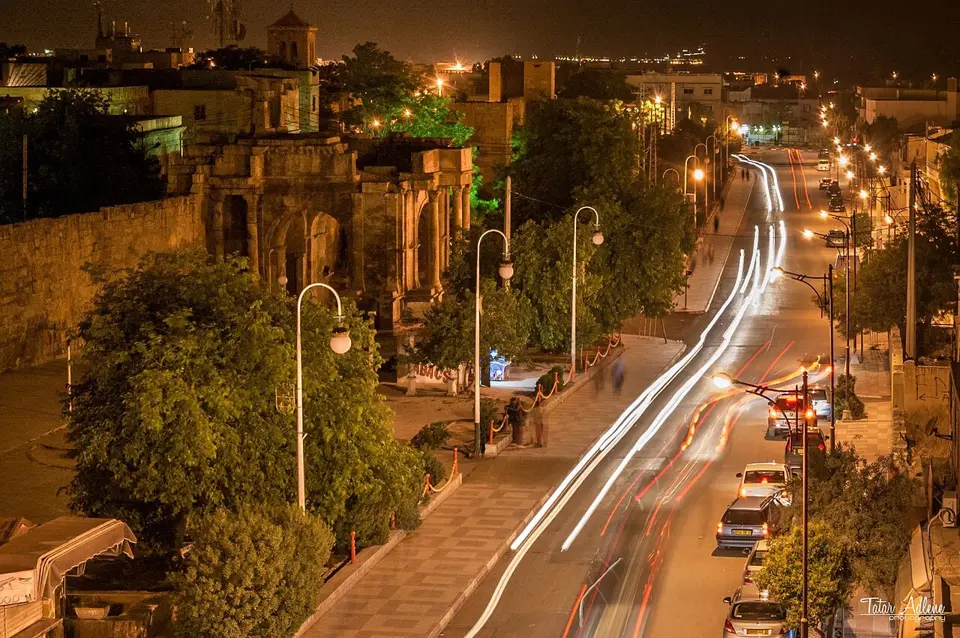
Own work. CC BY-SA 4.0 · Wikimedia CommonsThis photograph shows the modern city, or the Wikipedia lead subject, rather than the ancient site itself. Samarkand (Manichaean seat in Sogdiana)
Samarkand, Uzbekistan · 6th–10th
Sogdian merchants carried Manichaeism east along the Silk Road. Ibn al-Nadim reports that the head of the Manichaean church eventually moved to Samarkand in the 10th century, and the Sogdian 'Dēnāwar' branch was based in the region.
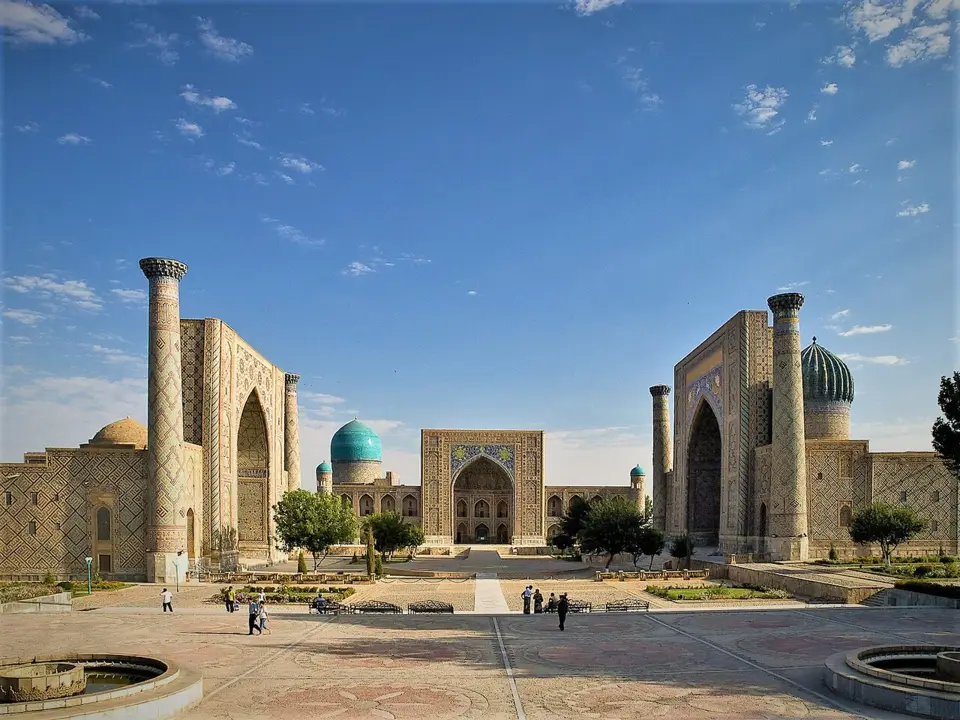
Registan_-_Gusjer.jpg. CC BY 2.0 · Wikimedia CommonsThis photograph shows the modern city, or the Wikipedia lead subject, rather than the ancient site itself. Ordu-Baliq (Karabalgasun), Uyghur capital
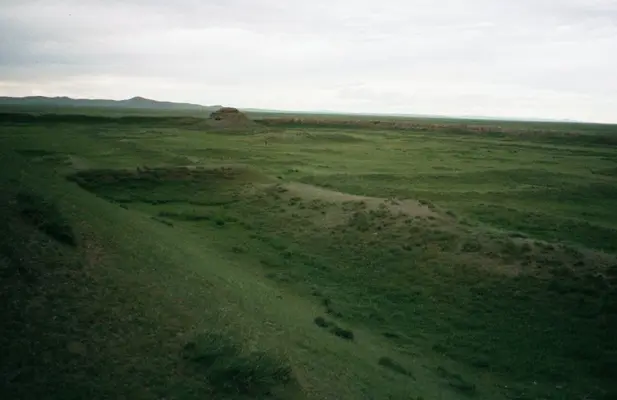
Kharbalgas, Orkhon valley, Mongolia · 8th–9th
Bögü Qaghan of the Uyghur Khaganate adopted Manichaeism around 762–763 after contact with Manichaean clergy in Luoyang. That made it the state religion of a steppe empire until the khaganate fell in 840. The trilingual Karabalgasun inscription (Old Turkic, Sogdian, Chinese) records the conversion.
http://en.wikipedia.org/wiki/File:Ordu-baliq.jpg ; http://biocomplexity.indiana.edu/jglazier/pp/mongolia/010722.php. CC BY-SA 3.0 · Wikimedia CommonsThis photograph shows the modern city, or the Wikipedia lead subject, rather than the ancient site itself. Qocho (Gaochang), Turfan oasis
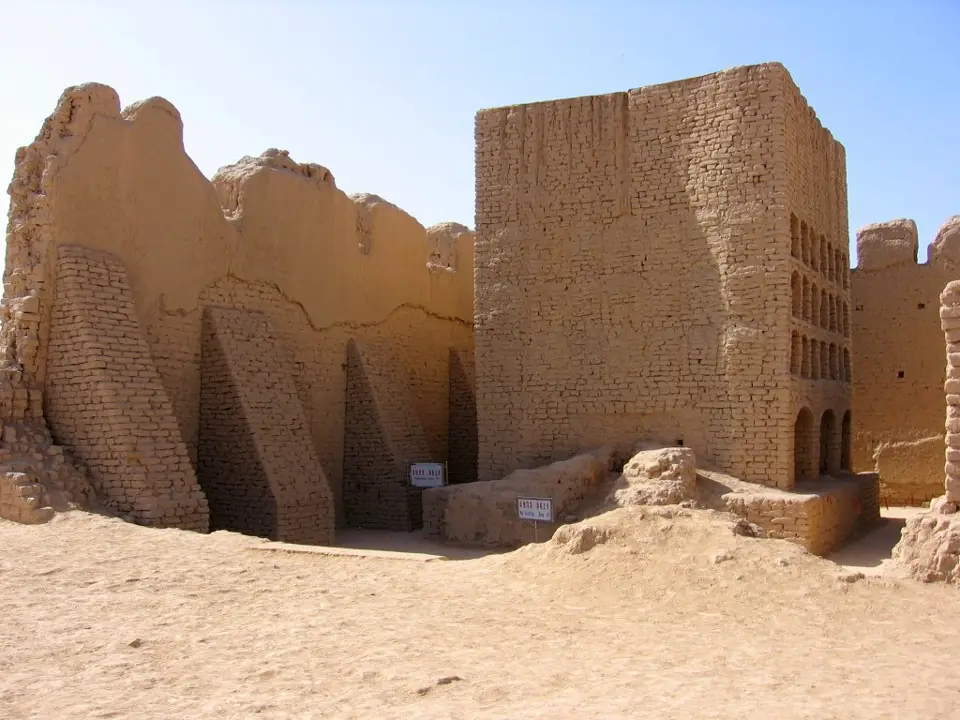
Gaochang ruins, Turpan, China · 9th–13th
After 840 the Uyghurs founded the Qocho kingdom in the Turfan oasis, where Manichaeism kept royal patronage until Buddhism replaced it in the 11th century. The Prussian Turfan expeditions (1902–1914) recovered thousands of Manichaean manuscript fragments here, along with illuminated pages and temple paintings. Most are now in Berlin.
Own work. CC BY-SA 2.5 es · Wikimedia CommonsThis photograph shows the modern city, or the Wikipedia lead subject, rather than the ancient site itself. Cao'an temple, Jinjiang near Quanzhou
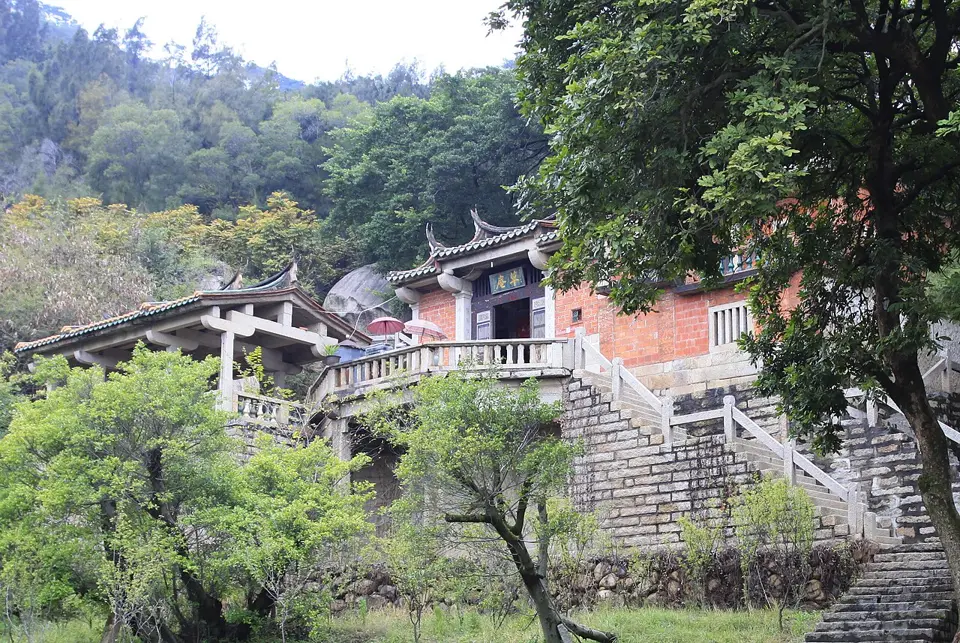
Cao'an, Jinjiang, Fujian, China · 12th–16th
Cao'an is a small hillside temple with a carved statue of Mani as the 'Buddha of Light', dated by its inscription to 1339. It is often called the only surviving Manichaean temple. Manichaeism ('the Religion of Light') survived in Fujian into the Ming dynasty, sometimes disguised as Buddhist or Daoist practice.
Own work. CC BY-SA 4.0 · Wikimedia CommonsThis photograph shows the modern city, or the Wikipedia lead subject, rather than the ancient site itself.
Spread
From Mesopotamia it spread west into Roman Egypt, North Africa, Rome, Gaul and Spain, and east to Iran, Sogdiana, the Uyghur steppe, the Tarim basin and Tang and later southern China. It was outlawed by Diocletian (c. 302) and persecuted by the Sasanians after Mani's death in prison at Beth Lapat (Gundeshapur, see the Persia batch).
Books
- Cologne Mani Codex ("On the Origin of his Body")
- Kephalaia (Kephalaia of the Teacher; Kephalaia of the Wisdom of my Lord Mani)
- Manichaean Psalm-Book
- Manichaean Homilies
- Synaxeis codex (on the Living Gospel)
- Shabuhragan (dedicated to Shapur I)
- Manichaean Book of Giants
- Living (Great) Gospel of Mani
- Tebessa Codex (Latin Manichaean treatise)
- Kellis Manichaean texts (letters, psalms, accounts)
- Chinese Manichaean Hymnscroll (Xiabuzan)
- Compendium of the Doctrines and Styles of the Teaching of Mani, the Buddha of Light
- Chinese Manichaean Traité (Sermon on the Light-Nous, Chinese version)
- Xwāstwānīft (Manichaean confession for Hearers)
What happened to it
Suppressed in the Roman Empire by the 6th century. In Iraq it survived under the caliphate until the 10th century, when its leader moved to Samarkand. It was the state religion of the Uyghurs (c. 762–840) and of Qocho until about the 11th century, was banned in China in 843, and survived in Fujian into the Ming period. It is the only former world religion that died out completely, apart from modern revivals.
Hostile sources
Hegemonius. Acts of Archelaus c. 340
Hostile; fictionalized debate.
Alexander of Lycopolis. Against the Doctrines of Manichaeus c. 300
Hostile (pagan philosopher).
Augustine of Hippo. Anti-Manichaean works incl. Reply to Faustus; Against the Fundamental Epistle 388–400
Hostile former Hearer; quotes Manichaean texts.
Ephrem the Syrian. Prose Refutations 4th c.
Hostile.
Kartir. Inscriptions at Naqsh-e Rajab / Ka'ba-ye Zartosht late 3rd c.
Hostile (Zoroastrian high priest).
Their own words
Mani and the Manichaean church. Cologne Mani Codex; Kephalaia; Psalm-Book; Homilies; Shabuhragan; Turfan hymns and letters; Chinese Hymnscroll and Compendium; Kellis letters 3rd–13th c.
Insider; recovered in the 20th century.
Ibn al-Nadim. Fihrist, ch. 9 987
Neutral Muslim bibliographer quoting Manichaean sources.
Sources
- ManichaeismConfessional source
Catholic Encyclopedia 1913 (confessional). Accessed 2026-11-11.
- Manicheism i. General Survey (W. Sundermann)
Encyclopaedia Iranica. Accessed 2026-11-11.
- Mani
e-GEDSH (Gorgias Encyclopedic Dictionary of the Syriac Heritage). Accessed 2026-11-11.
- Manichaeism
Wikipedia. Accessed 2026-11-11.