library
Library of Caesarea Maritima (Origen and Pamphilus)
232–638
attested. Attested by Eusebius, Jerome and manuscript notes. Its size and exact end are unknown.
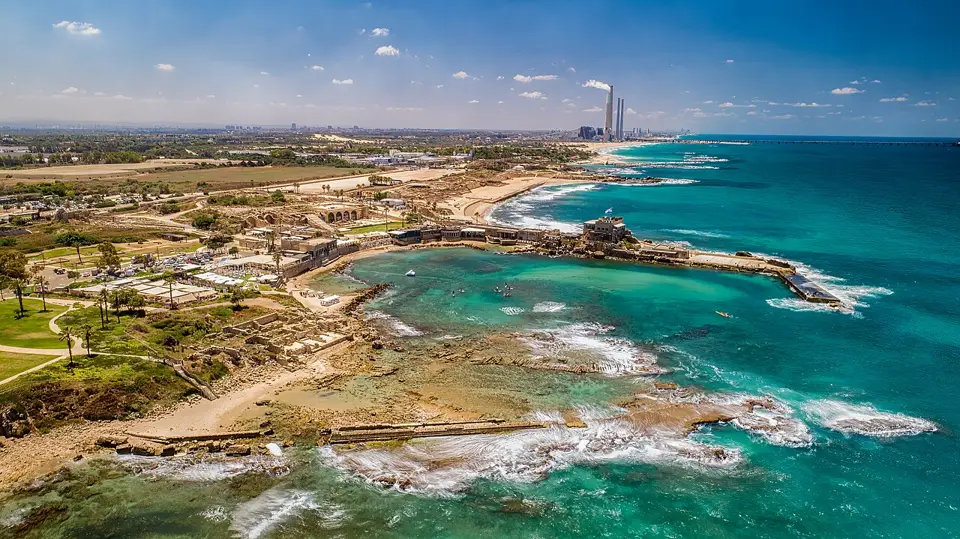
Origen brought his books from Alexandria to Caesarea, and Pamphilus built them into the largest Christian library of antiquity. Eusebius used it for his histories, Jerome consulted it, and bishops Acacius and Euzoius had its decaying papyri recopied on parchment. It probably perished around the Arab conquest.
Place: Caesarea Maritima · On the map
People
- Origen (moved here c. 232-234)
- Pamphilus of Caesarea (d. 309)
- Eusebius of Caesarea
- Euzoius (had damaged rolls recopied on parchment, late 4th c.)
Manuscripts made here
Origen's Hexapla (six-column Old Testament)
Kept now: lost; fragments survive, e.g. a Psalms palimpsest in Milan (Biblioteca Ambrosiana)
Corrected Bible copies; a corrector's note in Codex Sinaiticus cites collation with a copy 'corrected by the holy martyr Pamphilus'
Kept now: Codex Sinaiticus: mostly British Library (Add MS 43725), also Leipzig, St Catherine's Sinai and St Petersburg
Eusebius's Church History, Chronicle and Onomasticon, written using this library
Kept now: many later manuscripts