Church of the Kathisma ('Seat' of Mary) between Jerusalem and Bethlehem
c. c. 456 – c. 800
Place: kathisma · coming soon
31.737, 35.219 · On the map
The site, its Marian cult and the later mihrab are attested by excavation. That Q 19's birth scene reflects specifically Kathisma traditions is a scholarly hypothesis.
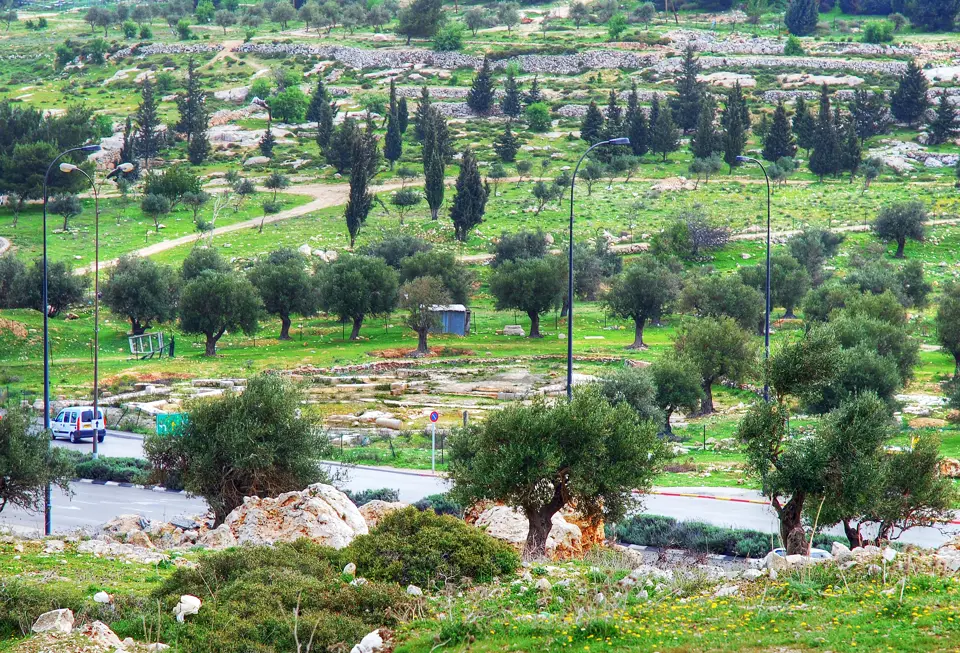
An octagonal church was built around 456 over a rock where Mary was said to have rested on the way to Bethlehem. Local tradition linked the spot with a palm and a spring, and the Feast of the Theotokos was celebrated there. In the early Islamic period the building gained a mihrab, and scholars connect its traditions with Q 19:22–26, where Mary gives birth under a palm by a stream.
People named here
- Ikelia
- Mary
Where scholars disagree
For
- Stephen J. Shoemaker — 'Christmas in the Qur'an' (JSAI 28, 2003)
- Guillaume Dye — 'Lieux saints communs, partagés ou confisqués' (2012): ties Q 19:16–33 to Kathisma and a Palestinian setting
Against
- Angelika Neuwirth — 'Imagining Mary – Disputing Jesus' (2009): reads Q 19 as an early Meccan text built from Syriac Marian imagery, without needing a Palestinian setting
Links
Influence
Out
The local Kathisma cult (Mary's rest, palm/spring) is proposed as the setting behind Q 19:22–26.
influenced
scholarly hypothesisOut
Palm-tree miracle (Gospel of Pseudo-Matthew and Dormition texts)
The palm-and-spring rest story belongs to the same Palestinian Marian tradition.
shared_tradition
scholarly hypothesis
Context
In
Council of Ephesus (431): Mary as Theotokos
After Ephesus, Marian shrines and feasts such as the Kathisma's spread.
context
attested
Sources
- Wikipedia: Kathisma Church
Wikipedia contributors (CC BY-SA 4.0). Accessed 2026-11-11.
- Discussion of G. Dye, 'Lieux saints communs, partagés ou confisqués: aux sources de quelques péricopes coraniques (Q 19:16–33)' (in Partage du sacré, 2012) and S. Shoemaker, 'Christmas in the Qur'an' (JSAI 28, 2003): 'Palmeira e pedra desenterrados'
REVER (PUC-SP). Accessed 2026-11-11.
- Angelika Neuwirth, 'Imagining Mary – Disputing Jesus: Reading Surat Maryam and Related Meccan Texts', in Fremde, Feinde und Kurioses (2009), 383–416
De Gruyter. Accessed 2026-11-11.