First hijra: Muslim refugees at the court of the Negus
c. c. 615 – c. 628
Place: aksum
14.134, 38.721 · On the map
The migration as an outline — a group of early Muslims found refuge with a Christian Aksumite king around the mid-610s — is widely accepted. The recitation scene, the exact year, the two-wave scheme, head-counts, a private royal conversion, and the Negash burials are traditional or later elaborations.
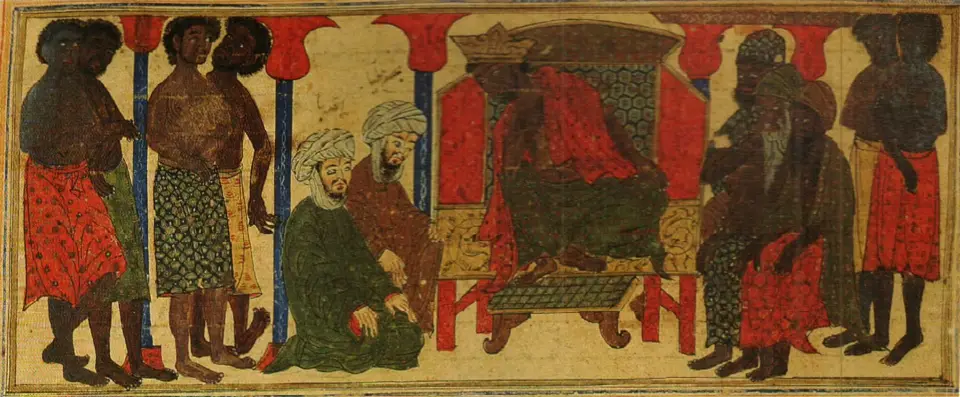
Stand-in
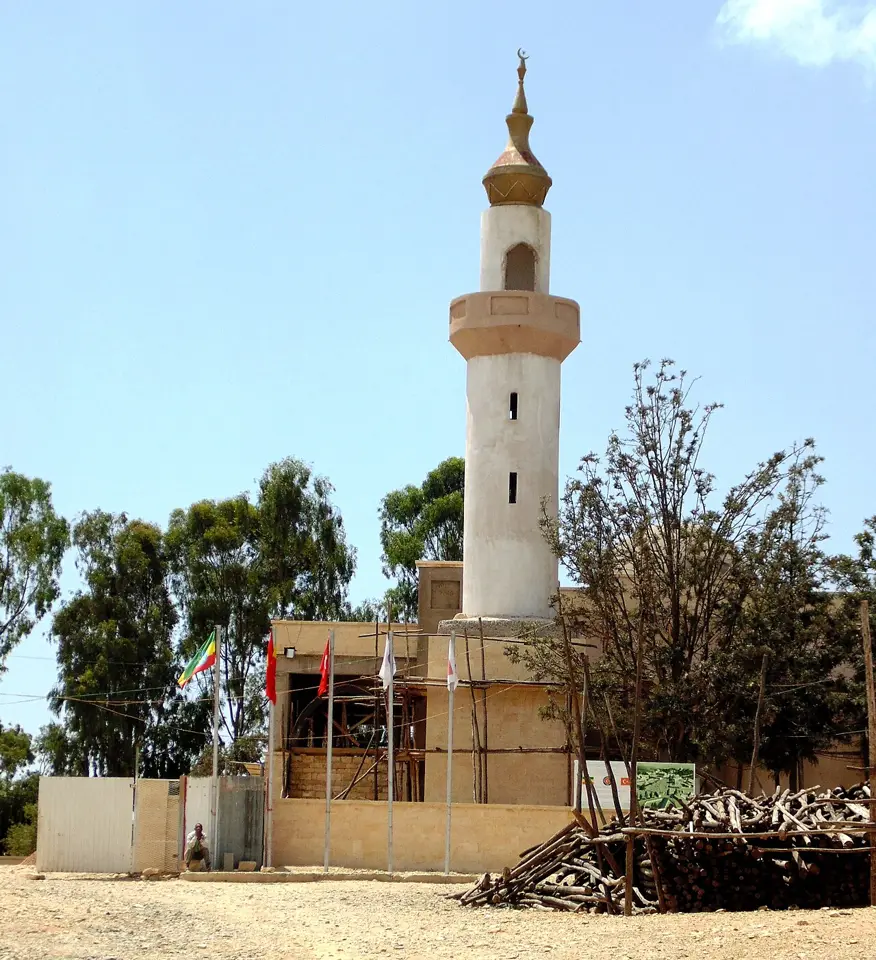
Under persecution in Mecca, Muhammad advised a group of his followers to seek refuge with the Christian king of Aksum, 'a land where no one is wronged.' Ibn Ishaq says they crossed from the Hijaz (later accounts often name the port of Shu'ayba and an arrival via Adulis) and were received at the Aksumite court. When Quraysh envoys, including 'Amr ibn al-'As, demanded their return, Ja'far ibn Abi Talib is said to have explained their religion and recited the opening of Surat Maryam. The king wept, declared that their faith and his came from the same source, and refused to surrender them. That courtroom scene is a literary set-piece of the sira; it should be presented as tradition, not as a stenographic report. The migrants' later association with the village of Negash, and the tombs shown there, belong to Ethiopian Muslim memory and are first attested in writing in the 16th century. The event is one of the earliest reported encounters of the new Muslim community with a Christian kingdom in Africa.
People named here
- Ja'far ibn Abi Talib
- al-Najashi (Ashama)
- 'Amr ibn al-'As
- Uthman ibn Affan (in some lists of the first group)
- Umm Salama
- Umm Habiba
Links
Place
Out
Negash in Tigray is the traditional site of the emigrants' graves.
located_at
traditional
People and office
Out
al-Najashi (Ashama ibn Abjar), the Christian Negus
The Negus protected the emigrants.
received_by
traditionalIn
'Ubayd Allah ibn Jahsh, the hanif who became a Christian in Ethiopia
'Ubayd Allah went with the emigrants to Ethiopia.
participant
traditional
Context
Out
Ja'far is said to have recited Surat Maryam before the Negus.
recited
traditionalIn
Frumentius and King Ezana: Aksum becomes Christian
Three centuries of Aksumite Christianity made Ethiopia a Christian refuge.
context
attested
Sources
- The Life of Muhammad: A Translation of Ishaq's Sirat Rasul Allah
A. Guillaume, trans., Oxford University Press (1955); Internet Archive record. Accessed 2026-11-12.
- Migration to Abyssinia
Wikipedia contributors (CC BY-SA 4.0). Accessed 2026-11-12.
- Qur'an, Surat Maryam (19)
Quran.com (linked text; translation rights vary). Accessed 2026-11-12.
- The early Islamic tradition in Ethiopia: report on the first season of the archaeo-ethnographic research in Negash (Tigray)
Augustyniak and Kuraszkiewicz, SALC, 2024. Accessed 2026-11-12.