Abraha, Christian ruler of Yemen
c. c. 535 – c. 565
Place: sanaa
15.348, 44.206 · On the map
He is attested by Procopius (Wars 1.20) and his own inscriptions (CIH 541, Marib, 548; Ry 506, Murayghan, 552). The al-Qalis church and the elephant campaign come from later Arabic tradition (see year-of-the-elephant).
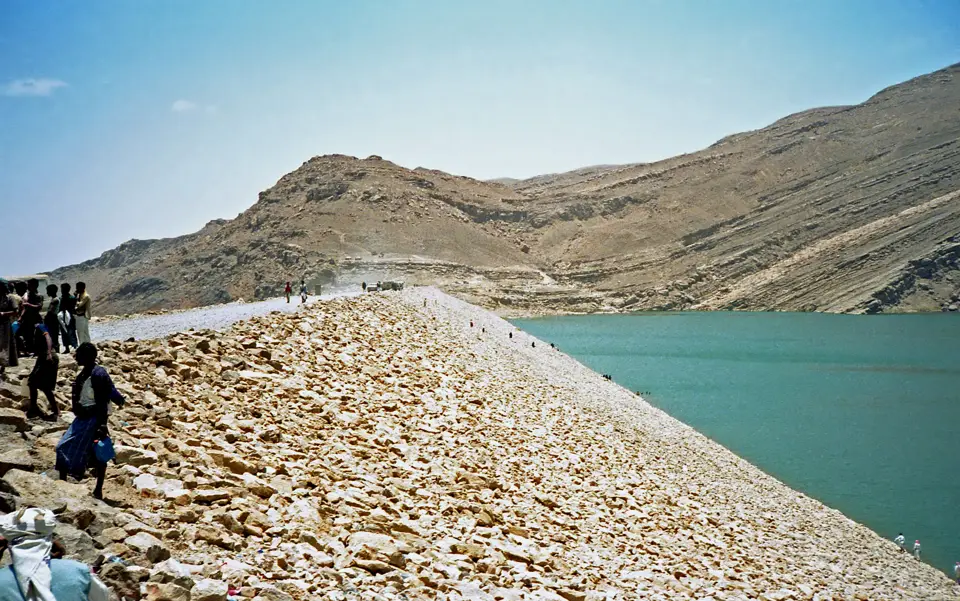
Abraha was an Aksumite general who made himself king of Himyar. He repaired the Marib dam in 548 — his inscription opens by invoking 'Rahmanan and his Messiah and the Holy Spirit' and records a church service at Marib — and he campaigned into central Arabia in 552. Arabic tradition says he built a great church (al-Qalis) at Sanaa and marched on Mecca with an elephant.
People named here
- Abraha
- Procopius
Links
Influence
Out
Himyar's official monotheism (Rahmanan)
Abraha's inscriptions keep 'Rahmanan' but add 'his Messiah and the Holy Spirit', a Christian Trinity formula.
continued
attested
People and office
Out
The 'Year of the Elephant': Abraha's march on Mecca (Q 105)
Abraha's central Arabian campaigns (552) versus the traditional Elephant story (570).
led
scholarly hypothesis
Sequence
In
Kaleb (Ella Asbeha) of Aksum invades Himyar
Abraha, an Aksumite commander, seized power in Himyar after Kaleb's conquest.
succeeded_by
attested
Conflict and authority
Out
al-Qalis, Abraha's cathedral at Sanaa
Tradition credits Abraha with the Sanaa cathedral.
built
traditional
Sources
- Wikipedia: Abraha
Wikipedia contributors (CC BY-SA 4.0). Accessed 2026-11-11.
- Christian Julien Robin, 'Abraha et la reconquête de l'Arabie déserte: un réexamen de l'inscription Ryckmans 506 = Murayghan 1', JSAI 39 (2012), 1–93
OCIANA bibliographic record. Accessed 2026-11-11.
- Christian Julien Robin, 'Ḥimyar, Aksum, and Arabia Deserta in Late Antiquity: The Epigraphic Evidence', in G. Fisher (ed.), Arabs and Empires before Islam (2015)
Oxford University Press. Accessed 2026-11-11.