Valentinians
Valentinian school, Italian school (Ptolemy, Heracleon), Eastern school (Theodotus, Marcus)
c. 136 (Valentinus in Rome) – late 4th century; named in canons to 692
attested. The school is well attested in hostile sources, and the Nag Hammadi finds confirm parts of their reports. Assigning particular Nag Hammadi texts to Valentinians is a scholarly classification, and attributing the Gospel of Truth to Valentinus himself is a hypothesis.
Leaders
- Valentinus (c. 100–c. 160)
- Ptolemy
- Heracleon
- Theodotus
- Marcus
- Florinus (Roman presbyter, linked by Irenaeus)
Beliefs
A transcendent Father emanates a 'fullness' (Pleroma) of paired divine aeons. The youngest aeon, Sophia (Wisdom), falls through her desire to know the Father, and her passions become the material world, which is shaped by a lesser creator (the Demiurge). Christ and the Saviour bring knowledge (gnosis) that restores the spiritual seed. Humanity is described as spiritual, soul-endowed and material, and the 'psychic' ordinary Christians can also be saved.
Home bases
Loading the map…
Alexandria (Basilides, Carpocrates, early Valentinus)
Alexandria, Egypt · 2nd
Alexandria was home to the first named Christian teachers we know of outside the New Testament: Basilides (fl. c. 120–140), Carpocrates and his son Epiphanes, and the young Valentinus. Clement of Alexandria preserves fragments of their writings, which makes the city the best-documented centre of 2nd-century 'Gnostic' teaching.

Own work. CC BY-SA 3.0 · Wikimedia CommonsThis photograph shows the modern city, or the Wikipedia lead subject, rather than the ancient site itself. Rome (Valentinian school)
Rome, Italy · 2nd
Valentinus taught in Rome from about 136 to 160 (Irenaeus dates him to the bishops Hyginus, Pius and Anicetus), and his pupils Ptolemy and Heracleon led the so-called Italian school. Ptolemy's Letter to Flora was probably written there.
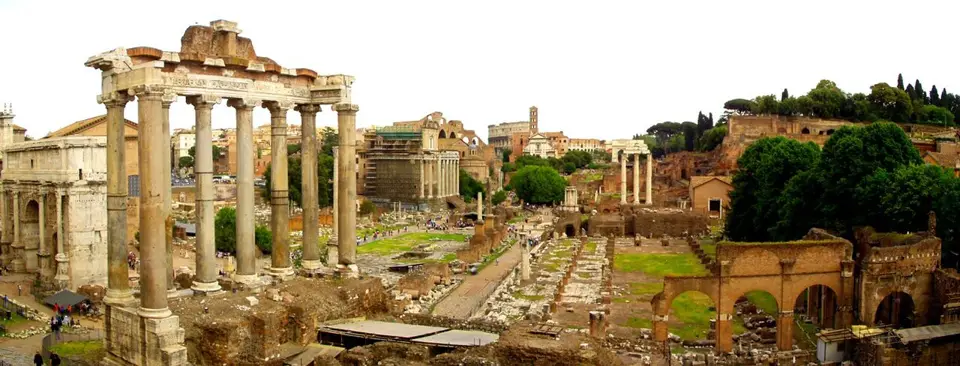
. CC BY-SA 3.0 · Wikimedia Commons Lugdunum (Marcosians in the Rhône valley)
Lyon, France · 2nd
Irenaeus, bishop of Lyon, says followers of the Valentinian teacher Marcus were active 'in our own district of the Rhône', drawing in local women. Much of Book I of Against Heresies answers this local situation.
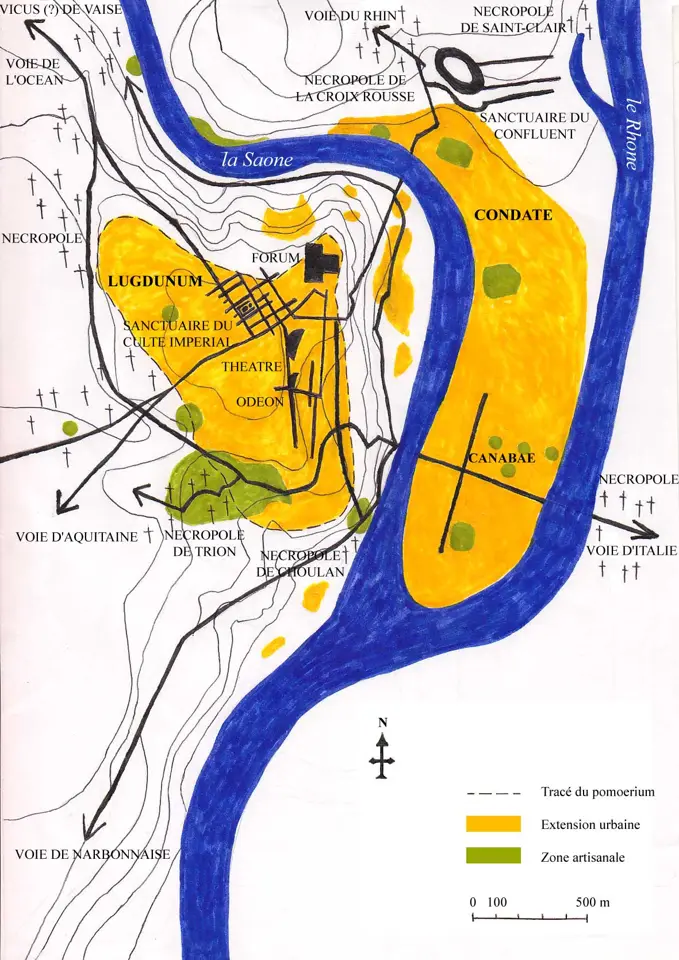
Own work. CC BY-SA 3.0 · Wikimedia CommonsThis photograph shows the modern city, or the Wikipedia lead subject, rather than the ancient site itself. Callinicum (Valentinian chapel, 388)
Raqqa, Syria · 4th
In 388 monks at Callinicum on the Euphrates burned a 'Valentinian' meeting house at the same time as a synagogue was destroyed. Ambrose of Milan's letter defending the attackers is the latest firm evidence of an organized Valentinian congregation.
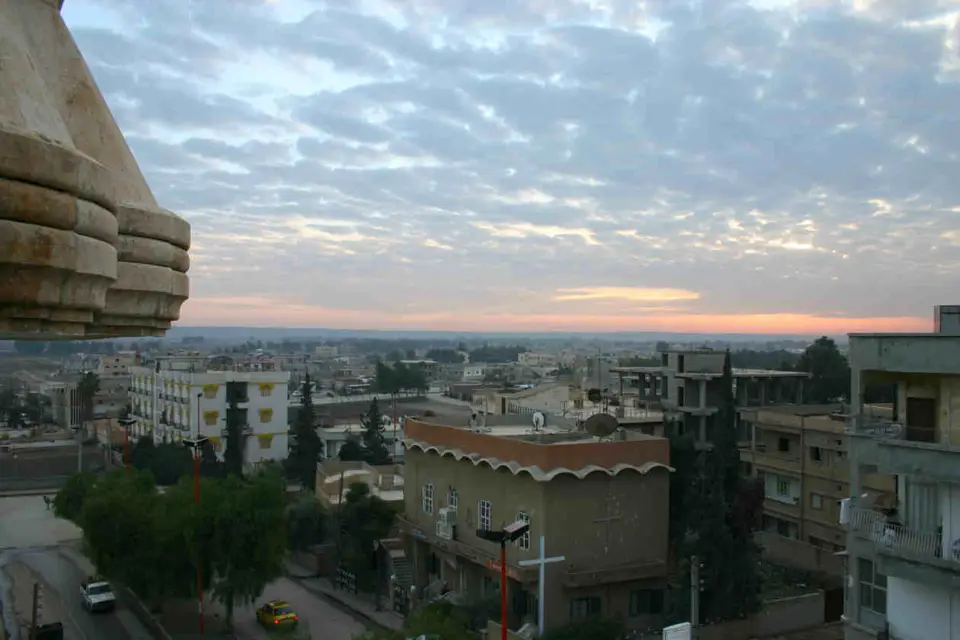
Originally from en.wikipedia; description page is (was) here 17:18, 9 April 2005 Zeledi 1260x840 (66,057 bytes) (Sunset over the Rooftops). CC BY-SA 3.0 · Wikimedia CommonsThis photograph shows the modern city, or the Wikipedia lead subject, rather than the ancient site itself. Nag Hammadi (Jabal al-Tarif codices, found 1945)
Nag Hammadi, Egypt · 4th
In December 1945 farmers found a jar near Jabal al-Tarif holding 13 Coptic codices (12 books and leaves of a 13th) with 52 tractates. They include most surviving Sethian and Valentinian texts. The books were probably made in the mid-4th century, and their cartonnage includes dated papyri from the 340s.
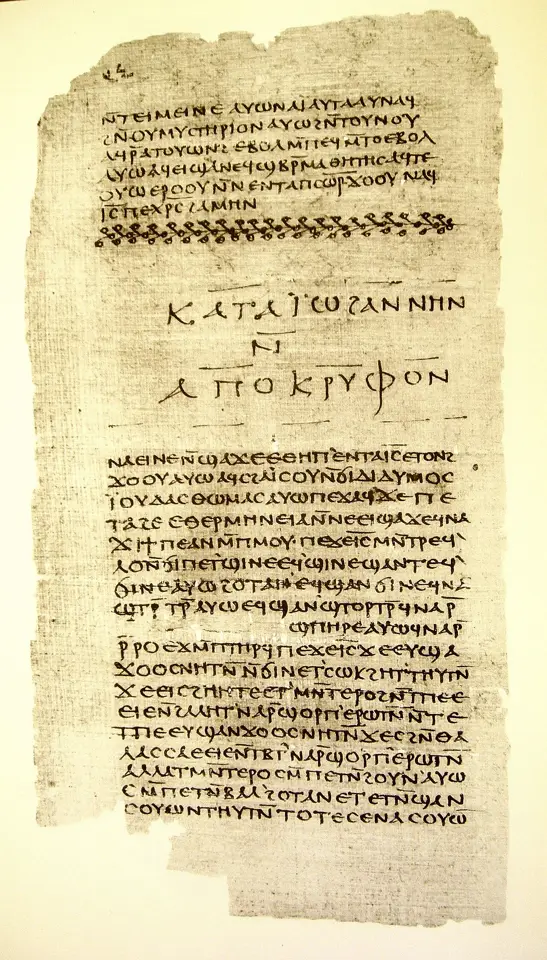
http://www.biblical-data.org/coptic/coptic_MSS.html. Public domain · Wikimedia Commons
Spread
Valentinus came from Egypt (educated in Alexandria) and taught in Rome from about 136 to 160. His pupils split into an 'Italian' school (Ptolemy, Heracleon) and an 'Eastern' school (Theodotus, Marcus). Followers are reported in Gaul (the Rhône), Asia Minor, Syria and Egypt. Many lived as an inner circle within ordinary congregations rather than as a separate church.
Books
- Gospel of Truth
- Gospel of Philip
- Tripartite Tractate
- Treatise on the Resurrection (Letter to Rheginos)
- Interpretation of Knowledge
- A Valentinian Exposition (with liturgical fragments on anointing, baptism, eucharist)
- Ptolemy, Letter to Flora
- Heracleon, Commentary on John (fragments)
- Valentinus, fragments of letters, homilies and a psalm ("Harvest")
- Excerpts from Theodotus
- Prayer of the Apostle Paul
What happened to it
It declined in the 4th century under imperial anti-heresy laws. The last firm evidence of a congregation is the burning of a Valentinian chapel at Callinicum in 388. Canon 95 of the Council in Trullo (692) still lists Valentinians among groups to be received by anointing, though this may be a formula rather than evidence of survival.
Hostile sources
Irenaeus of Lyon. Against Heresies I.1–8, 11–21 c. 180
Hostile; earliest systematic heresiology; ANF translation (public domain).
Tertullian. Against the Valentinians c. 200–210
Hostile; NewAdvent ANF translation (public domain).
Hippolytus of Rome (attrib.). Refutation of All Heresies VI.29–55 c. 222–235
Hostile; ANF translation (public domain). Authorship disputed.
Epiphanius of Salamis. Panarion 31–36 c. 374–377
Hostile and often careless with groups he never met; no public-domain English translation located (F. Williams translation is in copyright). Link is an overview, not the text.
Clement of Alexandria. Stromata; Excerpts from Theodotus c. 200
Critical but engaged; quotes Valentinian authors verbatim.
Their own words
Ptolemy. Letter to Flora (in Epiphanius, Panarion 33.3–7) c. 150–180
Insider text preserved whole inside a hostile work.
Heracleon. Commentary on John (fragments in Origen) c. 170
Insider fragments chosen by a critical respondent.
Nag Hammadi Codex I and others. Gospel of Truth, Tripartite Tractate, Treatise on the Resurrection, Gospel of Philip, Interpretation of Knowledge, Valentinian Exposition 2nd–3rd c. (Coptic copies 4th c.)
Insider texts; Valentinian attribution is a scholarly classification.
Sources
- Valentinus and ValentiniansConfessional source
Catholic Encyclopedia 1913 (confessional). Accessed 2026-11-11.
- Valentinianism
Wikipedia. Accessed 2026-11-11.