Simonians
followers of Simon Magus, Menandrians, Saturnilians (Antioch)
1st – 3rd century
tradition. Simon in Acts is the earliest witness. That he founded a Gnostic system is a heresiological construction, and most scholars treat the later 'Simonian' system as a separate 2nd-century development. Justin's statue story is a misreading of a Semo Sancus inscription.
Leaders
- Simon Magus
- Helena
- Menander
- Saturninus (Satornil)
Beliefs
In hostile accounts Simon claimed to be 'the Great Power' of God, and Helena was the fallen First Thought, redeemed by him. Menander promised his baptized followers immortality, and Saturninus taught that angels made the world and that Christ was not truly embodied.
Home bases
Loading the map…
Samaria / Gitta (Simon Magus)
Sebastia (Samaria), West Bank, Palestine · 1st–3rd
Acts 8 sets Simon the magician in 'the city of Samaria'. Justin Martyr, himself from Samaria, says Simon came from the village of Gitta and was worshipped with his companion Helena. Church writers made Simon the father of all heresies.
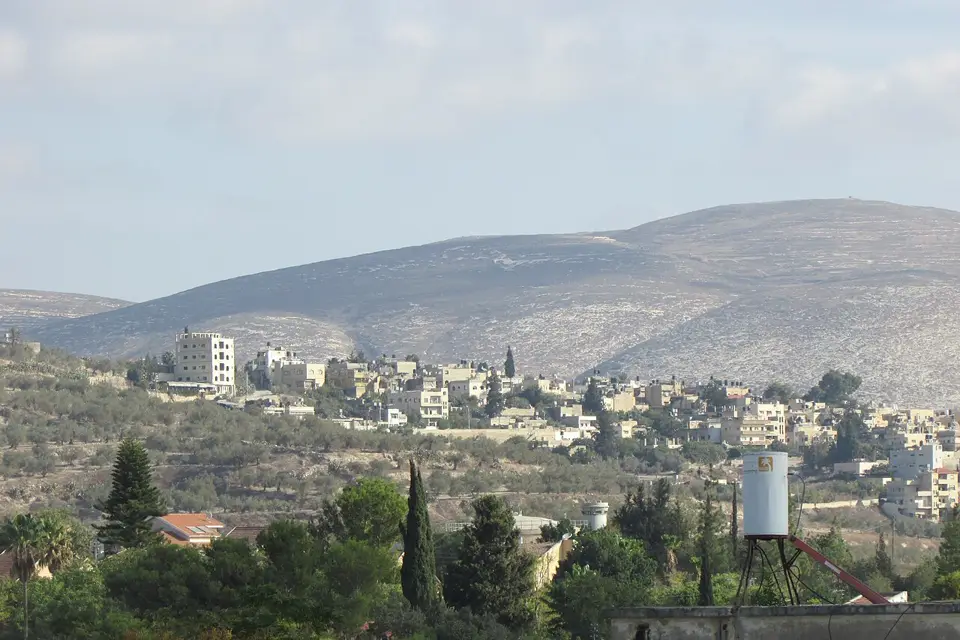
Own work. CC BY-SA 4.0 · Wikimedia CommonsThis photograph shows the modern city, or the Wikipedia lead subject, rather than the ancient site itself. Antioch (Menander, Saturninus; Paul of Samosata)
Antakya, Turkey · 1st–3rd
Irenaeus names Menander, Simon's disciple, and Saturninus as teachers at Antioch in the late 1st and early 2nd centuries. In the 260s Bishop Paul of Samosata of Antioch was condemned by synods for teaching that the Word dwelt in the man Jesus rather than being personally incarnate. He refused to leave the church building until the emperor Aurelian intervened in 272.
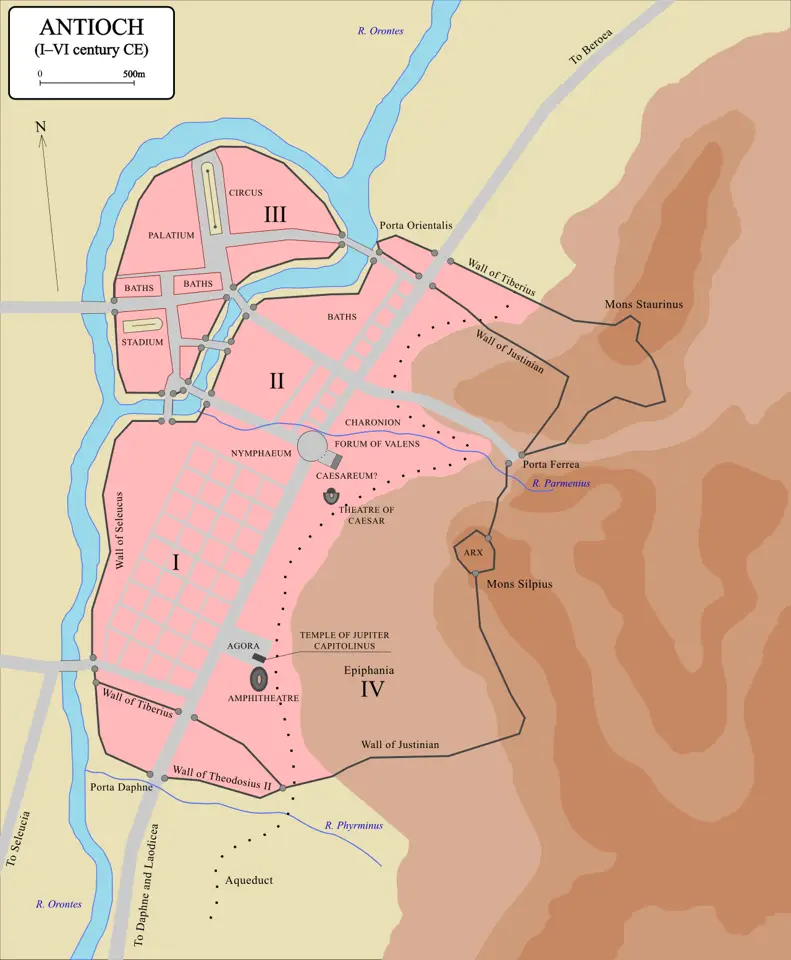
Own work; original file by Cristiano64. Data appears to be taken from Committee for the Excavation of Antioch-on-the-Orontes (1936) Map of Ancient Antioch or a derivative work thereof.. CC BY-SA 4.0 · Wikimedia CommonsThis photograph shows the modern city, or the Wikipedia lead subject, rather than the ancient site itself.
Spread
Samaria, Antioch and Rome. Justin's story of a statue to 'Simo Sancto' actually refers to a dedication to the Sabine god Semo Sancus, found in 1574.
Books
What happened to it
Origen (c. 248) says there were barely 30 Simonians left in the world.
Hostile sources
Luke. Acts 8:9–24 c. 80–110
Hostile; earliest.
Justin Martyr. First Apology 26, 56 c. 150
Hostile; Samaritan himself.
Irenaeus of Lyon. Against Heresies I.23–24 c. 180
Hostile; earliest systematic heresiology; ANF translation (public domain).
Hostile; ANF translation (public domain). Authorship disputed.
Epiphanius of Salamis. Panarion 21 c. 374–377
Hostile and often careless with groups he never met; no public-domain English translation located (F. Williams translation is in copyright). Link is an overview, not the text.
Their own words
Attributed to Simon. Apophasis Megale (Great Declaration), paraphrased by Hippolytus 2nd c.?
Disputed; probably later Simonian school text known only via opponent.
Sources
- SimoniansConfessional source
Catholic Encyclopedia 1913 (confessional). Accessed 2026-11-11.
- Simon Magus
Wikipedia. Accessed 2026-11-11.