Marcionites
Marcionite church, followers of Marcion
c. 144 (break with Rome) – 5th century (Syria); scattered reports to the 10th century
attested. The group's existence, spread and canon are well attested, but almost entirely through opponents. Reconstructions of Marcion's gospel text are scholarly hypotheses (Harnack 1921; BeDuhn 2013; Klinghardt 2015), and his gospel's relation to Luke (abridgement vs. earlier form) is actively disputed.
Leaders
- Marcion of Sinope (c. 85–c. 160)
- Apelles (pupil, later independent)
- Lucanus
- Megethius (in the Adamantius dialogue)
Beliefs
Marcion distinguished the just but harsh creator God of the Jewish scriptures from the good, previously unknown Father revealed by Jesus. He rejected the Jewish scriptures as Christian scripture. He set up a closed canon of one gospel (closely related to Luke) and ten letters of Paul, edited to remove what he saw as later additions. Baptized members practised strict celibacy and asceticism.
Home bases
Loading the map…
Sinope
Sinop, Turkey · 2nd
Black Sea port named by hostile writers as Marcion's home town; Marcion is described as a wealthy shipowner (Tertullian) and, polemically, as a bishop's son (Epiphanius). No Marcionite remains are known from the city itself.
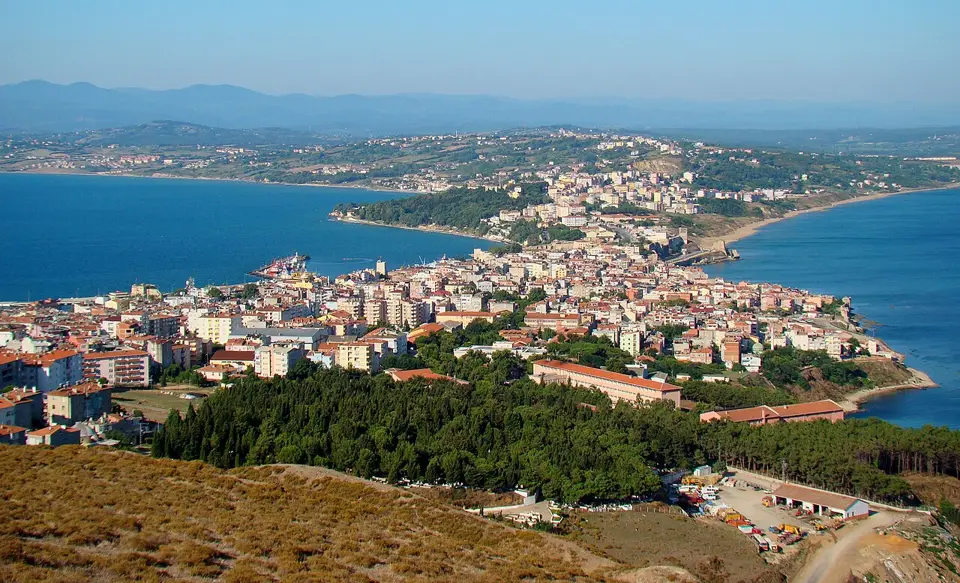
Own work by uploader, http://bjornfree.com/galleries.html. CC BY-SA 3.0 · Wikimedia CommonsThis photograph shows the modern city, or the Wikipedia lead subject, rather than the ancient site itself. Rome (Marcion's break, c. 144)
Rome, Italy · 2nd
Marcion was in Rome by about 140 and separated from the Roman church, traditionally in 144, after which his followers organized their own churches with bishops and martyrs. Rome was also where Justin Martyr first wrote against him (c. 150).
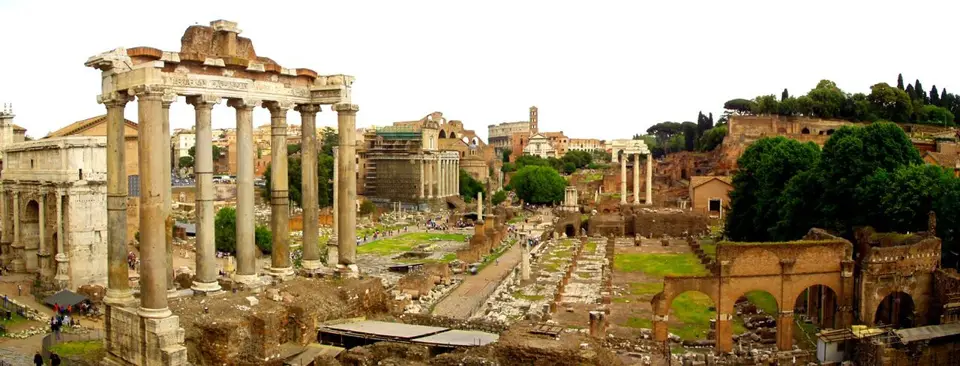
. CC BY-SA 3.0 · Wikimedia Commons Lebaba (Marcionite synagogue inscription, 318/319)
Deir Ali, Syria · 4th
A Greek inscription from the village of Lebaba, south of Damascus, records the 'synagogue of the Marcionites' and its presbyter Paul, dated to 318/319 CE. It is the earliest dated building inscription of any Christian assembly and direct, non-hostile evidence that Marcionite congregations still flourished in Syria in the 4th century.
Spread
Organized as a separate church with bishops right after the break in Rome. Justin Martyr (c. 150) already says it was found 'among every race'. It was strong in Syria and Mesopotamia, where Ephrem (4th c.) and Eznik of Kolb in Armenia (5th c.) still wrote against it. Theodoret of Cyrrhus (5th c.) says he converted over a thousand Marcionites in villages of his diocese.
Books
What happened to it
Pushed out of the cities by the 4th–5th centuries through polemic, imperial laws against heretics, and episcopal campaigns. Village congregations in Syria lasted into the 5th century. Ibn al-Nadim (10th c.) still mentions Marcionites in Khurasan. Marcion's decisive legacy was forcing the mainstream church to define its own two-part canon.
Hostile sources
Justin Martyr. First Apology 26, 58 c. 150
Hostile; earliest witness.
Irenaeus of Lyon. Against Heresies I.27; III.12 c. 180
Hostile; earliest systematic heresiology; ANF translation (public domain).
Tertullian. Against Marcion (5 books) c. 200–210
Hostile; NewAdvent ANF translation (public domain).
Epiphanius of Salamis. Panarion 42 c. 374–377
Hostile and often careless with groups he never met; no public-domain English translation located (F. Williams translation is in copyright). Link is an overview, not the text.
Ephrem the Syrian. Prose Refutations; Hymns against Heresies 4th c.
Hostile; Syriac. A C. W. Mitchell translation (1912–21, public domain) exists, but no stable URL was verified.
Eznik of Kolb. On God (Refutation of the Sects), book IV 5th c.
Hostile; Armenian.
Adamantius (pseudonym). Dialogue on the True Faith in God early 4th c.
Hostile; staged debate with Marcionites Megethius and Markus.
Their own words
Marcionite congregation of Lebaba. Building inscription (Le Bas–Waddington 2558) 318/319
Insider: the only surviving first-hand Marcionite document.
Sources
- MarcionitesConfessional source
Catholic Encyclopedia 1913 (confessional). Accessed 2026-11-11.
- Marcionism
Wikipedia. Accessed 2026-11-11.