Elkasaites (Elchasaites)
Elcesaites, Sampsaeans (Epiphanius), Mughtasila ("those who wash", Ibn al-Nadim) — identification disputed
c. 116 (date of the revelation) – 10th century (if identified with the Mughtasila)
disputed. The Book of Elchasai is attested through quotations. That Mani's baptists were Elkasaites rests on the CMC's naming of Alchasaios and is widely accepted but debated. The Mughtasila and Mandaean links are hypotheses.
Leaders
- Elchasai (Elxai), legendary recipient of the book
- Alcibiades of Apamea (in Rome, c. 220)
Beliefs
The Book of Elchasai, said to have been delivered by a gigantic angel (the Son of God) with a female Holy Spirit, offered a second baptism for forgiveness of even grave sins. It also taught repeated washing against illness, prayer facing Jerusalem, Torah observance including circumcision and the Sabbath, and the rejection of sacrifice and of Paul. Christ was thought to appear repeatedly in different bodies, and denying the faith under persecution was permitted.
Home bases
Loading the map…
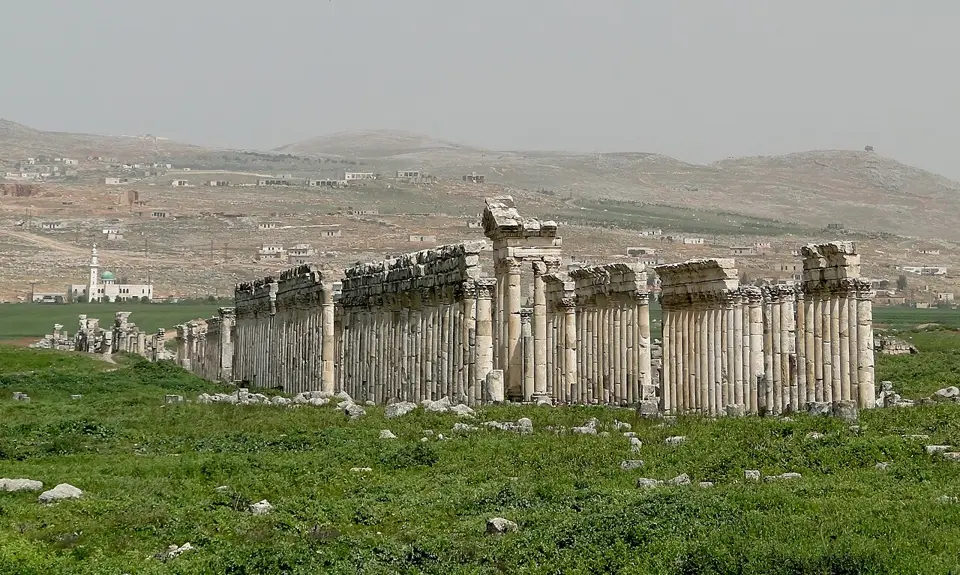
Apamea (home of Alcibiades)
Qalaat al-Madiq, Syria · 3rd
Hippolytus names Alcibiades, who promoted the Book of Elchasai in Rome, as a man of Apamea in Syria. There is no other evidence of Elkasaites in the city.
Own work. CC BY-SA 3.0 · Wikimedia CommonsThis photograph shows the modern city, or the Wikipedia lead subject, rather than the ancient site itself. Rome (Alcibiades brings the Book of Elchasai, c. 220)
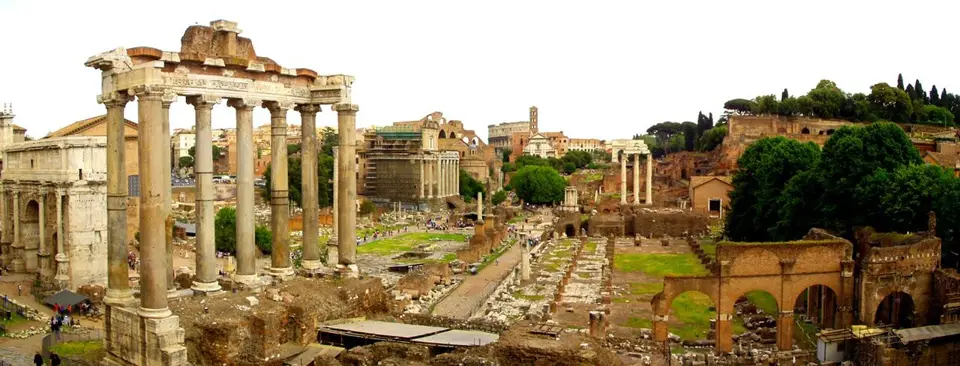
Rome, Italy · 3rd
Hippolytus reports that Alcibiades of Apamea came to Rome under Pope Callistus (c. 217–222) preaching a new baptism for forgiveness of sins from the Book of Elchasai. This is our most detailed eyewitness account of the movement.
. CC BY-SA 3.0 · Wikimedia Commons Southern Mesopotamia / Mesene (the baptists Mani grew up among)
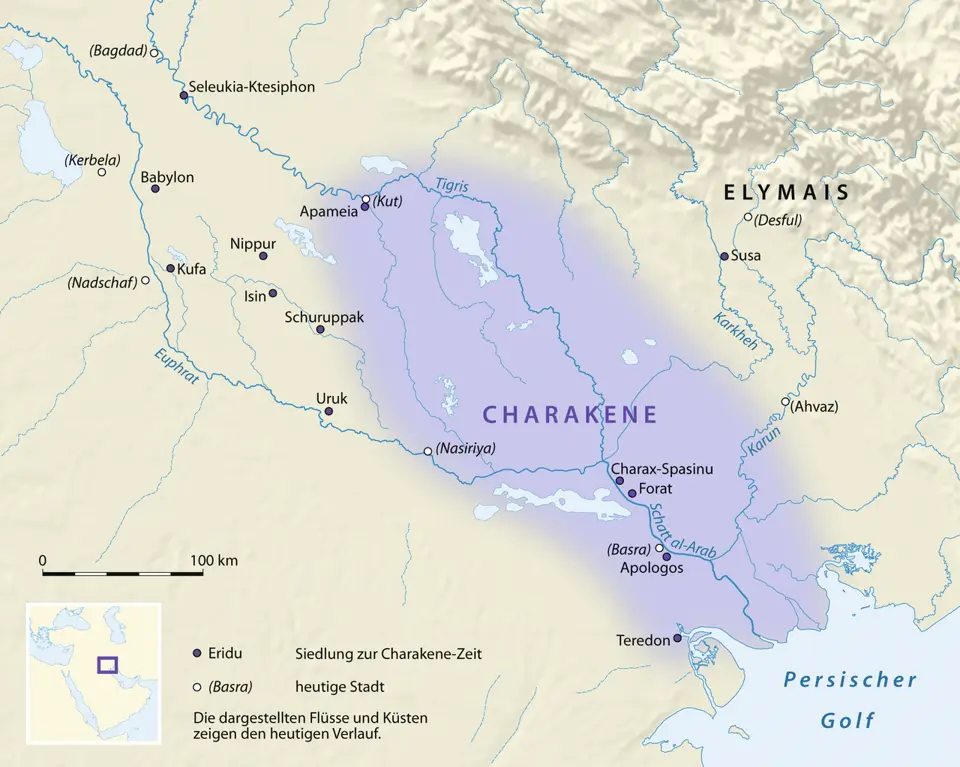
Maysan region, Iraq · 3rd–10th
Approximate location.
The Cologne Mani Codex says Mani grew up from age 4 to 24 in a baptist community that traced its rule to 'Alchasaios'. Ibn al-Nadim (10th c.) places the Mughtasila ('those who wash') in the marshes of southern Iraq. The coordinates mark the Mesene region, not a known settlement.
self-made, using GTOPO-30 Elevation Data by USGS. CC BY 3.0 · Wikimedia CommonsThis photograph shows the modern city, or the Wikipedia lead subject, rather than the ancient site itself.
Spread
Its centre was east of the Jordan and around the Dead Sea (Epiphanius), with outreach to Rome around 220 and Caesarea (Origen heard an Elkasaite preacher, c. 247). It reached southern Mesopotamia, where Mani was raised among baptists who revered 'Alchasaios'.
Books
What happened to it
Apparently survived in Mesopotamia as baptist communities. Ibn al-Nadim's 10th-century Mughtasila of the southern marshes are often linked to them. Their relation to the Mandaeans is disputed.
Hostile sources
Hippolytus of Rome (attrib.). Refutation of All Heresies IX.13–17; X.29 c. 222–235
Hostile; ANF translation (public domain). Authorship disputed.
Eusebius of Caesarea. Church History VI.38 (quoting Origen) c. 313–325
Hostile toward heresies; quotes earlier documents verbatim. NPNF translation (public domain).
Epiphanius of Salamis. Panarion 19, 30, 53 c. 374–377
Hostile and often careless with groups he never met; no public-domain English translation located (F. Williams translation is in copyright). Link is an overview, not the text.
Their own words
Cologne Mani Codex. Mani's life among the baptists 4th–5th c. copy
Insider for Manichaeans and hostile to the baptists Mani left.
Book of Elchasai. Quoted fragments c. 116
Insider fragments via hostile writers.
Sources
- ElcesaitesConfessional source
Catholic Encyclopedia 1913 (confessional). Accessed 2026-11-11.
- Elcesaites
Jewish Encyclopedia 1906. Accessed 2026-11-11.
- Alchasai
Encyclopaedia Iranica. Accessed 2026-11-11.
- Elcesaites
Wikipedia. Accessed 2026-11-11.