Donatists
Pars Donati ("party of Donatus"), "Church of the martyrs" (self-view), Circumcellions (associated militant rural ascetics), Maximianists (splinter, 393), Rogatists (splinter)
311/312 – c. 600 (last mentions in Gregory the Great's letters)
attested. This is one of the best-documented schisms, with records from both sides. Modern readings of it as a social or 'nationalist' Berber protest (Frend 1952) are interpretive hypotheses now heavily qualified.
Leaders
- Majorinus
- Donatus of Carthage ("the Great", d. c. 355)
- Parmenian (bishop of Carthage 362–391)
- Primian
- Petilian of Cirta
- Tyconius (lay theologian, critical insider)
- Optatus of Thamugadi
- Gaudentius of Thamugadi
Beliefs
The church must be pure and holy, so sacraments given by clergy who had betrayed the faith under persecution ('traditores', those who handed over scriptures) were invalid. Converts from the Catholic side therefore had to be rebaptized. Donatists saw themselves as the continuing church of the martyrs and of Cyprian, persecuted by a compromised state church.
Home bases
Loading the map…
Carthage (the double episcopate, 311/312–411)
Tunis area, Tunisia · 4th–5th
The schism began when rigorist Numidian bishops rejected Caecilian's consecration as bishop of Carthage, around 311–312, because one of his consecrators was said to have handed over scripture under persecution. They elected Majorinus and then Donatus. Carthage then had rival bishops for a century, until the imperial conference of 411.
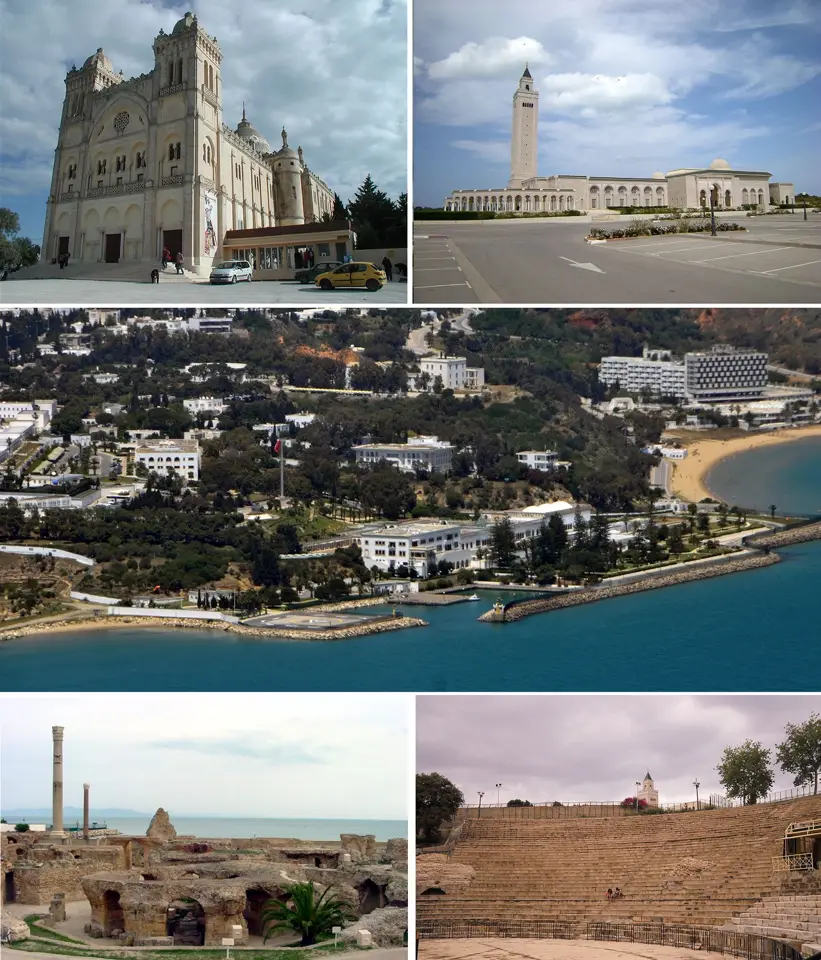
Author: Citizen59 Author: Issam Barhoumi Author: Leandro Neumann Ciuffo Author: Patrick Verdier Author: nonanet. CC BY-SA 3.0 · Wikimedia CommonsThis photograph shows the modern city, or the Wikipedia lead subject, rather than the ancient site itself. Bagai (Baghaï), Numidia
Baghaï (Ksar Baghai), Algeria · 4th
Bagai was a Donatist stronghold. Here in 347 the imperial commissioners Paul and Macarius clashed with Donatus of Bagai's followers, in what Donatists remembered as the 'Macarian persecution'. In 394 about 310 Donatist bishops met here to condemn the Maximianist splinter group.
Thamugadi (Timgad)
Timgad, Algeria · 4th–5th
Optatus, the Donatist bishop of Thamugadi (388–398), was allied with the rebel general Gildo and was remembered by Catholics as a tyrant. A large basilica complex in the town is commonly identified as his cathedral. Gaudentius, his successor, threatened to burn himself in his church in 420 rather than surrender it.
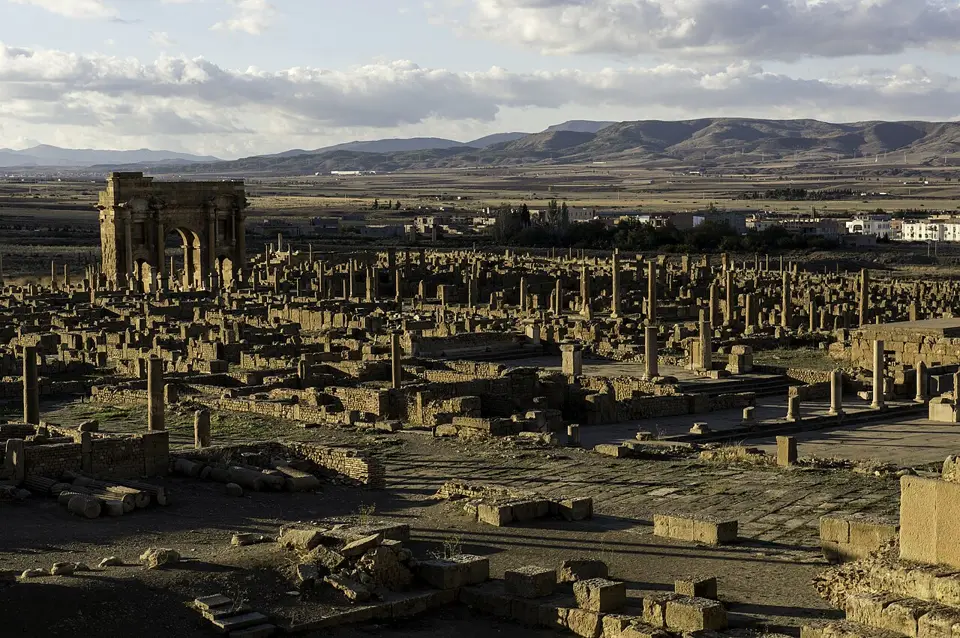
Timgad. CC BY-SA 2.0 · Wikimedia CommonsThis photograph shows the modern city, or the Wikipedia lead subject, rather than the ancient site itself. Cirta (Constantine), see of Petilian
Constantine, Algeria · 4th–5th
The records of 303 from Cirta, read out at the hearing of Silvanus in 320, show local clergy handing over church property under persecution. Petilian, the Donatist bishop of Cirta, led his side at the 411 conference, and Augustine answered his letters in a three-book treatise.

Own work. CC BY-SA 4.0 · Wikimedia CommonsThis photograph shows the modern city, or the Wikipedia lead subject, rather than the ancient site itself.
Spread
Strongest in Numidia and Mauretania, though present across Roman Africa, with a small Roman congregation. For much of the 4th century it was probably the majority church of the African countryside.
Books
What happened to it
Condemned by Rome (313), Arles (314) and Constantine (316), and periodically repressed, as in the 'Macarian times' of 347. The Conference of Carthage (411), with nearly 300 bishops on each side, ruled for the Catholics, and an imperial edict of 412 outlawed the movement. It survived under the Vandals and is still mentioned by Gregory the Great around 590–600, then disappears before the Arab conquest.
Hostile sources
Optatus of Milevis. Against Parmenian the Donatist c. 365–385
Hostile; preserves the documentary dossier. Vassall-Phillips translation 1917 (public domain).
Hostile; NPNF translations.
Imperial commissioner Marcellinus. Gesta collationis Carthaginiensis (minutes of the 411 conference) 411
Official stenographic record; neutral form, Catholic-sponsored.
Their own words
Tyconius. Book of Rules (Liber regularum) c. 380
Insider (critical Donatist).
Donatist church. Passion of Donatus; Passion of Maximian and Isaac; Passion of Marculus; Acts of the Abitinian martyrs (Donatist recension) 4th c.
Insider martyr literature.
Petilian; Parmenian; Gaudentius. Letters and treatises (fragments in Augustine and Optatus) 4th–5th c.
Insider fragments via opponents.